


Can You Drink Tap Water in Barcelona?
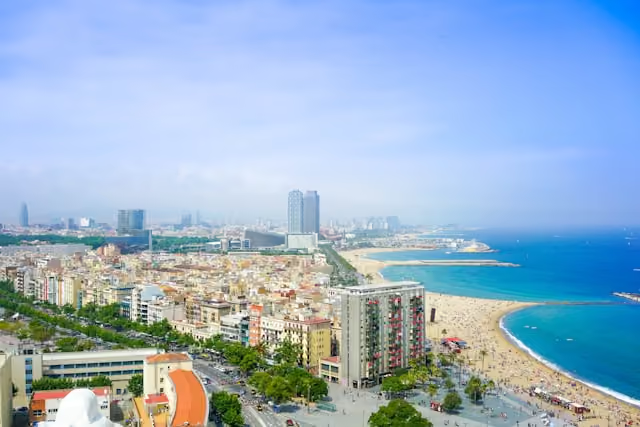
Complete Drinking Water Safety Information for Barcelona
Barcelona's tap water is safe to drink and meets EU Drinking Water Directive standards without exception. The city's supply is managed by Aigues de Barcelona (part of the Agbar/Veolia group), drawing water from two primary sources: the Ter River in Girona province, which supplies around 60% of the city's water, and the Llobregat River in the southern metropolitan area. Both sources are treated at the Sant Joan Despí and Abrera plants using coagulation, sedimentation, sand filtration, ozone treatment, UV disinfection, and chlorination before distribution across the Barcelona metropolitan network.
The water is technically safe, but Barcelona's tap water has a well-known reputation among both visitors and locals for a pronounced taste many find unappealing. The Llobregat River drains agricultural and industrial zones of the Catalonian interior, leaving higher mineral content and organic compounds that the treatment process cannot entirely eliminate. The result is a harder, more chlorinated flavour — around 350–400 mg/L total dissolved solids — noticeably different from the lighter water of cities with spring-fed supplies like Rome or Lisbon. This taste issue explains why Barcelona has one of the highest per-capita bottled water consumption rates in Europe despite a fully safe supply.
In the central tourist areas — the Gothic Quarter, El Born, Eixample, Gràcia, and Barceloneta — hotels, restaurants, and bars all draw from the same Aigues de Barcelona network and the water is safe at every point. The Eixample neighbourhood, served by more modern pipe infrastructure, tends to experience slightly less taste variation than older neighbourhoods with aging pipes. Many hotels in the tourist corridor around Las Ramblas and the Gothic Quarter provide filtered water or mineral water in rooms as a hospitality standard, responding to guest taste preferences rather than any safety concern.
A large proportion of Barcelona's residents filter their tap water with activated carbon filter jugs rather than buying bottled water daily. This is the most practical and sustainable approach for longer stays. Several Barcelona neighbourhoods including Gràcia and Poblenou have free enhanced-filtration public drinking fountains operated by Aigues de Barcelona. For short-stay visitors, bottled water is the convenient choice; for stays of a week or more, a filter jug from Mercadona or Carrefour is worth the small investment.
For day trips from Barcelona to Sitges, Montserrat, or the Costa Daurada, tap water is equally safe throughout Catalonia, though taste varies by location. Dehydration risk is high in summer months when temperatures regularly exceed 35°C, so carrying a water bottle is important. Font Vella, Solan de Cabras, and Vichy Catalàn are the leading local mineral water brands available at every supermarket — Mercadona, Carrefour, Bonpreu, and Dia — at low cost for visitors who prefer bottled water throughout their stay.
Bottled Water Information
Bottled water is extremely widely available throughout Barcelona given the strong local preference for taste over tap water. Font Vella — a still mineral water from the Pyrenean foothills — is the dominant Spanish retail brand, found at every supermarket and corner store across the city. Vichy Catalàn, a naturally sparkling mineral water from Caldes de Malavella in Catalonia, is the local sparkling favourite. Solán de Cabras, Bezoya, and Aquabona are also widely available. A 1.5-litre bottle costs approximately €0.50–€1.50 at supermarkets including Mercadona, Carrefour, and Bonpreu, with prices higher at tourist-area restaurants and Barceloneta beach bars. Large-format bottles for apartment stays are stocked at all major supermarkets throughout the Gothic Quarter, Gràcia, and Eixample.
Is Ice Safe in Barcelona?
Ice in Barcelona is completely safe at all reputable establishments. Barcelona's municipal water supply, while distinctively flavoured, is free of biological contamination and meets EU safety standards. Hotels, restaurants, beach bars (chiringuitos) along Barceloneta, rooftop bars in Eixample, and tapas venues throughout the Gothic Quarter all use the same safe municipal supply for ice production. Ice quality is not a health concern anywhere in Barcelona.
Should You Use a Water Filter in Barcelona?
A water filter is useful but not medically necessary for longer stays in Barcelona. Activated carbon filters — Brita jugs, countertop filters, or filter bottles — effectively address the chlorine taste and partially reduce the hardness of Barcelona's tap water, producing a noticeably more palatable result. For short-stay visitors, bottled water is more practical. For stays of a week or more, a basic filter jug from Carrefour, Mercadona, or El Corte Inglés costs around €15–€25 and pays for itself quickly versus daily bottled water purchases. Several public drinking fountains with enhanced filtration are also available in Gràcia and Eixample as a free resource.
Should You Boil Tap Water in Barcelona?
Boiling Barcelona's tap water is completely unnecessary. Aigues de Barcelona's supply meets EU Drinking Water Directive standards with no biological safety concerns. Boiling does not improve the taste — which is the only genuine issue with Barcelona's water — and can concentrate mineral content, making taste slightly worse. The practical solution for taste improvement is filtration, not boiling, and even that is a preference rather than a health requirement.
Questions!
Is tap water safe to drink in Barcelona?
Yes. Barcelona's tap water meets EU Drinking Water Directive standards and is safe to drink from any tap throughout the city. The only issue is taste — the water has a noticeable chlorine and mineral flavour from the Llobregat River source that many visitors and locals find unappealing. Drinking from the tap carries no health risk.
Why does Barcelona's tap water taste so bad?
Barcelona's supply relies heavily on the Llobregat River, which drains agricultural and industrial zones of the Catalonian interior. The river water contains higher mineral concentrations and organic matter that the treatment plants cannot entirely remove, resulting in a harder, more chlorinated taste. The water is safe — the taste is the only practical issue.
Is ice safe in Barcelona?
Yes. Ice at all establishments across Barcelona — from beach bars in Barceloneta to rooftop hotels in Eixample — is safe. Barcelona's water supply is free from biological contamination, meaning ice quality is not a health concern anywhere in the city.
What is the best bottled water brand in Barcelona?
Font Vella is the most widely available Spanish still water brand, found at every supermarket and corner shop. Vichy Catalàn, a naturally sparkling mineral water from Catalonia, is the local sparkling favourite. Both are available at Mercadona, Carrefour, and Bonpreu for approximately €0.50–€1.50 per 1.5 litres.
Should I use a water filter in Barcelona?
For short visits, bottled water is more practical. For stays of a week or more, an activated carbon filter jug such as Brita (around €15–€25 at Mercadona or Carrefour) effectively removes the chlorine taste and partially reduces mineral hardness. The water is safe without a filter — filtration is purely for taste improvement.
We don't conduct independent water testing. We summarise and interpret publicly available official data. Conditions can change rapidly — always verify with local authorities before travelling.
Explore more destinationsSpain
📚 Official Resources & Further Reading
World Health Organization (WHO) – Drinking Water Safety Guidelines
Centers for Disease Control and Prevention (CDC) – Spain Travel Health Advice
Australian Government – Smartraveller Spain

.svg)
