

Can I drink the tap water in Asia
Comprehensive tap water safety information for countries across Asia, including Southeast Asia, East Asia, South Asia, and Central Asia.
Jump to Popular destinations
Cambodia
Asia

Indonesia
Asia

Malaysia
Asia
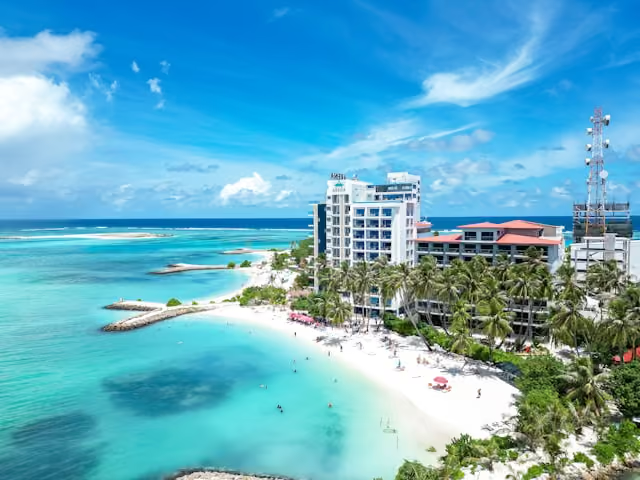
Maldives
Asia


South Korea
Asia
Sri Lanka
Asia
Taiwan
Asia


Popular destinations inAsia


.avif)


FAQ & Questions!
Which Asian country has the safest tap water?
Japan and Singapore are consistently ranked as having the safest and highest quality tap water in Asia. Both countries operate world-class treatment infrastructure and locals drink directly from the tap without concern. South Korea and Australia-influenced areas of the region also rank highly.
Which Asian country has the most unsafe tap water?
India, Indonesia, the Philippines, and Vietnam are among the most challenging for tap water safety. In these countries, infrastructure gaps, contamination risks, and waterborne illness are real concerns for travellers throughout most of the country.
Why is tap water generally unsafe across most of Southeast Asia?
Rapid urbanisation, ageing pipe networks, inconsistent treatment standards, and hot climates that accelerate bacterial growth all contribute. Even where water is treated at the source, contamination frequently occurs during distribution through old or damaged pipes and rooftop storage tanks.
What is the most common travel illness linked to water in Asia?
Traveller's diarrhoea is the most common, often called Bali Belly in Indonesia or Delhi Belly in India. It is usually caused by bacteria such as E. coli or Campylobacter in contaminated water or food washed in local water. Symptoms typically appear within 1–3 days of arrival.
Is it safe to drink tap water in Asian cities versus rural areas?
Cities generally have better infrastructure than rural areas, but even major capitals like Bangkok, Manila, and Jakarta are not safe for drinking tap water directly. Japan, Singapore, and South Korea are the main exceptions where urban tap water is reliably safe throughout the country.
We don't conduct independent water testing. We summarises and interpret publicly available official data. Conditions can change rapidly — always verify with local authorities before travelling.