


Can You Drink Tap Water in Ibiza?
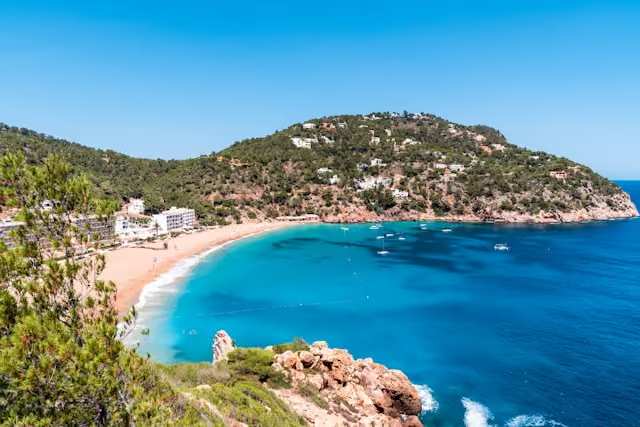
Complete Drinking Water Safety Information for Ibiza
Ibiza's tap water is technically treated and distributed by the Consorci d'Aigües d'Eivissa i Formentera (CAE), but it is not recommended for drinking and is not routinely consumed by island residents or visitors. The island faces a chronic freshwater deficit — Ibiza's natural aquifers have been severely depleted by decades of intensive tourism development and population growth, and groundwater extraction has led to seawater intrusion into the island's aquifer system. To compensate, the island relies heavily on two desalination plants — the Son Bosc facility near Sant Antoni de Portmany and the Es Codolar plant near the airport — which together produce the majority of the island's drinking water supply through seawater reverse osmosis.
The desalinated water from these plants is treated and technically meets Spanish and EU water standards at the point of production, but the combination of desalinated supply and partially salinised aquifer water produces tap water that many residents and visitors find unpleasant in taste. The water distributed across Ibiza Town (Eivissa), Sant Antoni de Portmany, Santa Eulalia des Riu, and the rural inland areas (including the Las Dalias and San Carlos zones) varies in salinity and mineral profile depending on the local mix of desalinated and aquifer sources in each distribution zone. In some areas, particularly older residential neighbourhoods with aging pipe connections, a brackish or flat taste is common.
Virtually no Ibiza resident drinks tap water directly, which is the clearest practical indicator for visitors. The island's large expatriate community and seasonal hospitality workforce rely almost universally on bottled water or in-home filtration systems. Hotels, villas, and aparthotels across San Antonio, Playa d'en Bossa, Talamanca, and Ibiza Town all provide sealed bottled water for guests and do not present tap water as a drinking option. Visitors in rental villas — particularly in the rural areas around San Jose, Santa Ines, and Sant Joan — should note that rural supply is sometimes supplemented by private water tanker deliveries, which introduces further variability.
The peak summer months of July and August place maximum pressure on Ibiza's water system, when the island's population of approximately 150,000 residents expands by several hundred thousand additional tourists. During this period, desalination plants operate at full capacity, and some areas experience lower pressure or supply variability. The practical recommendation is consistent throughout the year: bottled water for all drinking and tooth brushing, tap water for bathing and household use only. This applies equally to one-night stays in Ibiza Town for a club night, week-long villa rentals in the rural north, and extended stays in any part of the island.
For day trips from Ibiza to the neighbouring island of Formentera — accessed by ferry from Ibiza Town — the same water situation applies. Formentera relies on a single desalination plant and tanker supply, with tap water equally unsuitable for drinking. Carry sufficient sealed bottled water for any day on Formentera, where supermarket supply is more limited than on Ibiza itself.
Bottled Water Information
Bottled water is widely available across Ibiza at all supermarkets, convenience stores, and hotel shops. Font Vella and Solán de Cabras are the most widely available Spanish still mineral water brands on the island, alongside Evian and other imported brands at higher-end supermarkets. Font d'Or, sourced from Catalonia, is also commonly available. A 1.5-litre bottle costs approximately €0.80–€2.00 at Mercadona, Lidl, or Eroski supermarkets in Ibiza Town, San Antonio, and Santa Eulalia. Prices rise at beach bar chiringuitos and hotel minimarkets. Large-format 8-litre or 5-litre bottles from supermarkets are the most economical option for villa or apartment stays.
Is Ice Safe in Ibiza?
Ice at established venues in Ibiza is generally safe. Major clubs, beach clubs, and hotels at Playa d'en Bossa, Talamanca beach, San Antonio Bay, and Ibiza Town's marina area use commercially purified or treated water for ice production and meet standard hospitality safety requirements. At smaller local bars, restaurants, and less established venues throughout rural Ibiza and quieter resort areas, ice quality is less certain and caution is warranted. The safe approach: at large established venues — safe; at small local bars — request without ice if uncertain.
Should You Use a Water Filter in Ibiza?
A water filter is useful for longer stays in Ibiza, particularly for villa rentals or apartment stays where purchasing bottled water daily becomes expensive. Activated carbon filters partially address the taste issues with Ibiza's desalinated supply, though reverse osmosis systems are more effective given the salinity profile. Many Ibiza villas and long-term rental properties have undersink or countertop filters installed — where these are present and the property confirms them as functional, they are safe to use for drinking. For short-stay visitors, bottled water remains the most practical option.
Should You Boil Tap Water in Ibiza?
Boiling Ibiza's tap water is not a practical solution and is not recommended as a routine practice. The main concerns with Ibiza's water — desalination quality, high salinity from overstressed aquifers, and aesthetic taste — are not resolved by boiling. Bottled water is readily available at all supermarkets and shops across the island at reasonable prices and is the universally appropriate solution for all visitors.
Questions!
Is tap water safe to drink in Ibiza?
No. Tap water in Ibiza is not recommended for drinking. The island relies on heavily desalinated seawater and depleted aquifers managed by the Consorci d'Aigües d'Eivissa i Formentera. While technically treated, the water is widely considered unsuitable for direct consumption due to taste and variable salinity. Use sealed bottled water for all drinking and tooth brushing throughout your stay.
Why is Ibiza tap water not safe to drink?
Ibiza's natural aquifers have been severely depleted by decades of tourism-driven development, leading to seawater intrusion. The island compensates with two desalination plants, but the resulting water — alone or mixed with partially salinised aquifer water — has a flat or brackish taste and is not considered suitable for drinking. Virtually no resident or visitor drinks from the tap.
Is ice safe in Ibiza clubs and beach bars?
At established clubs, beach clubs, and hotels — including venues at Playa d'en Bossa, Talamanca, and San Antonio — ice is generally produced from purified or commercially treated water and is safe. At smaller local bars and restaurant, ice quality is less certain. When in doubt, request your drink without ice.
What bottled water brands are available in Ibiza?
Font Vella and Solán de Cabras are the most widely available Spanish still mineral water brands on the island. Font d'Or and Evian are also commonly available. A 1.5-litre bottle costs €0.80–€2.00 at Mercadona, Lidl, and Eroski. Buy large-format bottles at supermarkets for villa stays.
Is tap water safe to drink on Formentera?
No. Formentera faces the same water situation as Ibiza, relying on a single desalination plant and tanker supply. Tap water on Formentera is equally unsuitable for drinking. Carry sufficient sealed bottled water for any day trip to the island, as supermarket supply is more limited than on Ibiza.
We don't conduct independent water testing. We summarise and interpret publicly available official data. Conditions can change rapidly — always verify with local authorities before travelling.
Explore more destinationsSpain
📚 Official Resources & Further Reading
World Health Organization (WHO) – Drinking Water Safety Guidelines
Centers for Disease Control and Prevention (CDC) – Spain Travel Health Advice
Australian Government – Smartraveller Spain

.svg)
