


Can You Drink Tap Water in Kyoto?
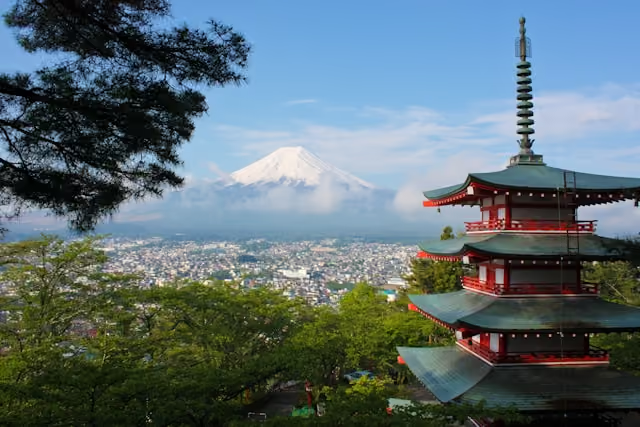
Complete Tap Water Safety Guide for Kyoto
Tap water in Kyoto is safe to drink. Kyoto’s municipal supply is managed by the Kyoto City Water Supply and Sewage Bureau and must comply with Japan’s national drinking water quality standards. Visitors can normally drink directly from taps in hotels, guesthouses, apartments, restaurants, and public facilities without boiling or filtering the water.
Kyoto’s water supply is closely connected with Lake Biwa, one of Japan’s largest freshwater sources, through the Lake Biwa Canal system. Raw water is treated before entering the city’s distribution network, and water quality is monitored through treatment and supply. The result is a reliable public water system suitable for everyday use.
Tap water is safe throughout Kyoto’s main visitor areas, including Kyoto Station, Gion, Higashiyama, Arashiyama, Fushimi, Nishiki Market, Kawaramachi, Pontocho, and the districts around Kinkaku-ji and Fushimi Inari Taisha. Hotels and established restaurants commonly serve tap water free of charge, and ice is normally made from the same treated municipal supply.
Kyoto’s tap water is generally soft compared with water in many other countries. This often gives it a mild taste and also makes it suitable for tea, coffee, cooking, and preparing foods where water flavour matters. Some visitors may still notice a slight chlorine smell, particularly when first turning on a tap. This is usually an aesthetic issue rather than a safety concern.
If water has been sitting in a building’s internal pipes overnight or for several hours, let the cold tap run briefly before filling a glass. This is especially sensible in older machiya townhouses, traditional guesthouses, or older apartment buildings where internal plumbing may affect taste after the water leaves the municipal network. Unless the property displays a warning or a temporary advisory is in place, the water remains safe to drink.
Tap water in Kyoto is suitable for brushing teeth, washing fruit and vegetables, cooking, preparing hot drinks, and making ice. It can also be used for infant formula when the formula manufacturer’s preparation instructions are followed carefully. Travellers with medical conditions requiring sterile water should follow their healthcare provider’s advice rather than relying on general travel guidance.
Temporary interruptions or boil-water notices are uncommon, but maintenance work, earthquakes, severe weather, or local plumbing problems can occasionally affect service. Follow instructions from the accommodation provider or Kyoto City if a specific notice is issued. Outside such unusual situations, there is no need to avoid Kyoto tap water.
Visitors can reduce plastic waste by carrying a reusable bottle and refilling it at their accommodation. Public drinking fountains and refill points may also be available at transport hubs, parks, attractions, and public buildings, although availability varies by location.
Bottled Water Information
Bottled water is widely available from convenience stores, supermarkets, vending machines, hotels, train stations, and attractions throughout Kyoto. It is convenient but unnecessary for safety. Refilling a reusable bottle with tap water is a practical and lower-waste alternative.
Is ice safe in Kyoto?
Ice is safe in Kyoto. Hotels, restaurants, cafes, convenience stores, bars, and major attractions normally make ice from treated municipal water that meets Japan’s drinking water standards. Visitors do not need to avoid ice at established venues.
Should you use a water filter in Kyoto?
A water filter is optional in Kyoto. A basic carbon filter may reduce chlorine smell or alter the taste for sensitive visitors, but it is not required to make municipal tap water safe.
Should you boil tap water in Kyoto?
Boiling tap water is not necessary in Kyoto under normal conditions. The municipal supply is safe to drink directly from the tap. Boil water only if a property or local authority issues a specific temporary advisory.
Questions!
Is tap water safe to drink in Kyoto?
Yes. Kyoto tap water is treated, monitored, and required to meet Japan’s national drinking water quality standards. It is safe to drink directly from the tap.
Can I brush my teeth with tap water in Kyoto?
Yes. Kyoto tap water is safe for brushing teeth, cooking, washing food, and other normal daily uses.
Is ice safe in Kyoto restaurants and hotels?
Yes. Ice at established restaurants, hotels, cafes, bars, convenience stores, and attractions is normally made from safe municipal water.
Do I need to boil tap water in Kyoto?
No. Boiling is not required under normal conditions. Follow local instructions only if a temporary water advisory is issued.
Does Kyoto tap water taste different?
Kyoto’s water is generally soft, although some visitors notice a mild chlorine smell. This is normally a taste issue rather than a safety concern.
We don't conduct independent water testing. We summarise and interpret publicly available official data. Conditions can change rapidly — always verify with local authorities before travelling.
Explore more destinationsJapan

📚 Official Resources & Further Reading
Kyoto City Water Supply and Sewage Bureau
Japan Ministry of Health, Labour and Welfare – Water Supply
CDC – Japan Traveler Health
Australian Government – Smartraveller Japan
World Health Organization – Water, Sanitation and Health

.svg)
