

Can You Drink the Tap Water at Lake Bled?
Complete Drinking Water Safety Information for Lake Bled
Lake Bled's tap water is supplied by the local Bled municipal water utility and sourced from clean underground aquifers fed by the Julian Alps — the same pristine Alpine groundwater system that supplies Ljubljana and the broader Gorenjska region. The water meets and exceeds EU drinking water standards and is completely safe to drink directly from any tap in the area. Slovenia as a whole has the highest per-capita freshwater resources in the EU, and the Bled area — nestled in the Julian Alps — sits at the heart of this exceptional natural water wealth.
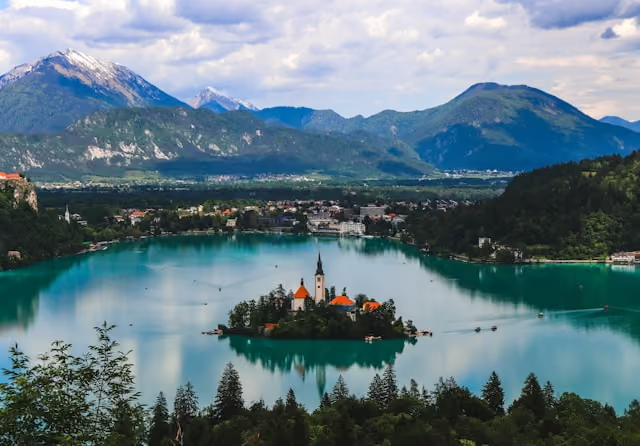
Lake Bled itself — a glacial lake surrounded by the Julian Alps, dominated by a clifftop castle and featuring the iconic Bled Island with its pilgrimage church — is one of Slovenia's most visited destinations and one of Central Europe's most photographed landscapes. The town of Bled and the surrounding area including Vintgar Gorge, Pokljuka plateau, and Triglav National Park all share the same exceptional Alpine water supply. Visitors hiking, cycling, or kayaking around the lake can drink from any tap in the area with complete confidence.
Hotels, guesthouses, and restaurants throughout the Bled area serve the same high-quality tap water. The local water has a clean, fresh Alpine character with no chlorine taste — a direct result of the purity of the source aquifers, which require minimal treatment. Cream cake (kremna režina) at the Park Hotel on the lakefront is a Bled institution; the coffee accompanying it benefits from the same excellent local water.
For activities in Triglav National Park — accessible from Bled — tap water in park facilities and mountain huts (koče) is safe. Natural stream and spring water in the Julian Alps is generally very clean given the pristine environment, but should be treated as a precaution if consumed directly from natural sources. In the town of Bled and all accommodation in the area, tap water is completely safe and of exceptional quality.
Bottled water is unnecessary at Lake Bled. Slovenia actively promotes tap water consumption and environmental sustainability, and bringing a reusable bottle to refill from any tap is both practical and in keeping with the area's conservation values. If you want a local specialty, Donat Mg mineral water from Rogaška Slatina is worth trying — its extraordinarily high magnesium content gives it a very distinctive taste quite unlike standard mineral water.
Bottled Water Information
Bottled water is available in Bled town at supermarkets, hotel shops, and restaurants, but is entirely unnecessary given the exceptional quality of the local tap water. Slovenia's famous Donat Mg mineral water — sourced from Rogaška Slatina and one of the world's most magnesium-rich natural waters — is widely available and worth trying as a Slovenian specialty. Standard bottled water is available at €0.30–€0.70 per 1.5-litre bottle in local shops. Bring a reusable bottle and refill from any tap for free.
Is ice safe at Lake Bled?
Ice is completely safe throughout Lake Bled's restaurants, cafes, and hotels. All ice is produced from the same exceptional Alpine tap water that serves the entire Bled area — water that meets and exceeds EU drinking water standards. There are no concerns about ice safety anywhere in the Lake Bled area.
Can you use a water filter at Lake Bled?
Water filters are not necessary at Lake Bled. The tap water quality already exceeds what filters are designed to achieve. Visitors can drink freely from any tap in the Bled area without any filtration whatsoever.
Should you boil tap water at Lake Bled?
Boiling is not necessary at Lake Bled. The water is of exceptional Alpine quality and completely safe to drink directly from the tap. No treatment of any kind is required for visitors.
Questions!
Can you drink tap water at Lake Bled?
Yes, absolutely. Tap water at Lake Bled is completely safe and of exceptional Alpine quality. The water is sourced from clean Julian Alps aquifers, requires minimal treatment, and meets and exceeds EU standards. It is among the finest drinking water in Europe. A reusable bottle is all you need.
Can you drink from natural springs and streams near Lake Bled?
The Julian Alps environment is very clean and natural water sources are generally of high quality, but wild water should be treated as a precaution before consumption. In the town of Bled and all accommodation, tap water is completely safe. For hiking in Triglav National Park, carry water from a tap rather than relying on untreated natural sources.
Is tap water safe in Lake Bled hotels and restaurants?
Yes. All tap water in Bled's hotels, guesthouses, restaurants, and cafes is completely safe and of excellent quality. The local water has a clean, fresh Alpine character with no noticeable chlorine taste.
Is ice safe at Lake Bled?
Yes. Ice throughout Bled's restaurants, cafes, and hotels is completely safe, produced from the same exceptional Alpine tap water supply.
Is tap water safe elsewhere in the Bled area — Vintgar Gorge, Bohinj, Kranjska Gora?
Yes. The entire Julian Alps region of Slovenia shares the same exceptional Alpine groundwater supply. Tap water is completely safe throughout the Gorenjska region including Bohinj, Kranjska Gora, and all areas within and around Triglav National Park.
We don't conduct independent water testing. We summarise and interpret publicly available official data. Conditions can change rapidly — always verify with local authorities before travelling.

.svg)
