

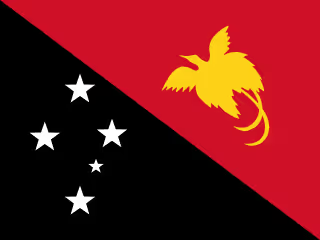
Can You Drink Tap Water in Papua New Guinea?
Tap water in Papua New Guinea is not safe to drink. Infrastructure is severely limited across this vast and mountainous country. Bottled water is essential throughout.
Complete Drinking Water Safety Information for Papua New Guinea
Tap water in Papua New Guinea is not safe to drink anywhere in the country. Papua New Guinea has some of the least developed water infrastructure in the Pacific region, with limited treatment capacity even in Port Moresby, the capital. The country's extraordinary geographic diversity — spanning vast rainforests, highlands, and over 600 islands — has made centralised water infrastructure extremely challenging to develop.
In Port Moresby, the capital, the water supply is treated by Eda Ranu but distribution infrastructure is aging and water quality at the tap is unreliable. Most expatriates, NGO workers, and international visitors rely entirely on bottled water or filtered water from dispensers. Hotels catering to international visitors provide bottled water as standard. The city's security situation also means visitors typically move within a limited range of vetted accommodation and venues.
Lae, the country's second city and industrial hub, and other urban centres have similarly limited water infrastructure. In highland areas including the Wahgi Valley and Mount Hagen — accessible to adventure visitors — water comes from mountain springs and streams that must be treated before consumption. The highlands have some of the most dramatic scenery in the Pacific but essentially no visitor water infrastructure outside of the few established lodges.
For visitors exploring Papua New Guinea's extraordinary natural assets — Kokoda Track trekkers, dive visitors to Milne Bay and Kimbe Bay, and birdwatchers in the rainforest — carrying a quality filter is essential. Natural water sources throughout PNG must be treated regardless of how pristine they appear.
Bottled water is available in Port Moresby and Lae but expensive and less reliable outside major centres. A quality filter rated for bacteria, protozoa, and viruses is strongly recommended for any travel beyond established hotels.
Bottled Water in Papua New Guinea

Bottled water is available in Port Moresby and Lae at supermarkets and hotels. It is expensive by regional standards and availability becomes very limited outside major centres. Stock up thoroughly before any travel beyond the main cities. For remote travel, a filter is more reliable than bottled water resupply.
Is ice safe in Papua New Guinea?
Ice should be avoided throughout Papua New Guinea unless you are certain it was made from purified or bottled water. In established international hotels in Port Moresby, ice is generally safe. In local restaurants and anywhere outside vetted hotels, avoid ice and request sealed bottled drinks.
Can you use a water filter in Papua New Guinea?
A quality portable filter is essential for any travel beyond Port Moresby and Lae in Papua New Guinea. For Kokoda Track trekking, highland travel, and diving expeditions, a filter rated for bacteria, protozoa, and viruses combined with purification tablets provides comprehensive protection. This is non-negotiable equipment for Papua New Guinea travel.
Should you boil tap water in Papua New Guinea?
Yes, boiling is essential if bottled water is unavailable. Bring water to a rolling boil for at least one minute. For trekking on Kokoda Track and in highland areas, combine boiling with a quality filter rated for viruses and protozoa. Bottled water is the safest primary option in Port Moresby and Lae.
Popular destinations inPapua New Guinea
Questions!
Is tap water safe in Port Moresby?
No. Port Moresby's water is treated but infrastructure is unreliable and contamination risk is real. All international visitors use bottled water. Hotels provide bottled water as standard.
Is water safe on the Kokoda Track?
Water from streams and rivers along Kokoda must be treated. A quality filter rated for bacteria, protozoa, and viruses is essential trekking equipment. Your operator will advise on water management for the full 96km route.
Is water safe for diving at Milne Bay and Kimbe Bay?
Dive operators at both locations manage water safely for guests. At dive lodges and liveaboard vessels, water is provided as part of the operation. Do not drink from local water sources at any point during your visit.
What is the safest approach to water in Papua New Guinea?
Bottled water in Port Moresby and Lae. A quality filter and purification tablets for all travel beyond major cities. Never drink from any tap or natural water source without treatment throughout the country.
We don't conduct independent water testing. We summarises and interpret publicly available official data. Conditions can change rapidly — always verify with local authorities before travelling.
Explore all popular destinations inPapua New Guinea
Explore more countries in Oceania
Tap water safety guides for Oceania including Australia, New Zealand, and Pacific Island nations.





📚 Official Resources & Further Reading
World Health Organization – Papua New Guinea
CDC – Papua New Guinea Travel Health Advisory
U.S. Department of State – Papua New Guinea Travel Advisory

.svg)
