

Can You Drink Tap Water in Chiang Mai?
Complete Drinking Water Safety Information for Chiang Mai
Tap water in Chiang Mai is not safe to drink and this applies throughout the entire city — the historic Old City within the moat, the trendy Nimmanhaemin Road (Nimman) area, the Night Bazaar zone, the Santitham residential district, the university areas near Chiang Mai University, and the outer suburbs toward the airport and Hang Dong. Water supply in Chiang Mai is managed by the Provincial Waterworks Authority (PWA), Region 9, which draws from the Ping River — one of Thailand’s main river systems originating in the mountains of northern Thailand — and from groundwater sources in the Chiang Mai basin. Treatment at the PWA's facilities includes coagulation, sedimentation, filtration, and chlorination, and the water meets Thai national drinking water standards (TIS 257) at the point of leaving the treatment plant.
The distribution infrastructure is the critical concern. Chiang Mai's pipe network is extensive and, in the older parts of the city including the historic Old City streets, Warorot Market area, and established residential districts, includes aging pipe sections that introduce rust, sediment, and bacterial regrowth between treatment and tap. The Ping River source — which flows through agricultural areas of northern Thailand before reaching Chiang Mai — carries seasonal agricultural runoff and is subject to elevated pollution loads during the April–June burning season, when crop and forest burning throughout northern Thailand introduces significant particulate and chemical inputs to the watershed. PWA adjusts treatment during these periods, but the water remains unsuitable for direct consumption at the tap.
The practical result is consistent with wider Thailand: no Chiang Mai resident drinks tap water directly, and no hotel, guesthouse, or restaurant presents tap water as a drinking option. Hotels throughout Nimmanhaemin, the Old City, and the riverside Riverside Bar district all provide sealed bottled water for guests. Chiang Mai’s enormous digital nomad and long-term expat community — attracted by the city’s lower costs, cooler northern climate, and quality of life — universally uses either sealed bottled water or the city’s widespread bor nam (water refill dispensers) for daily drinking water.
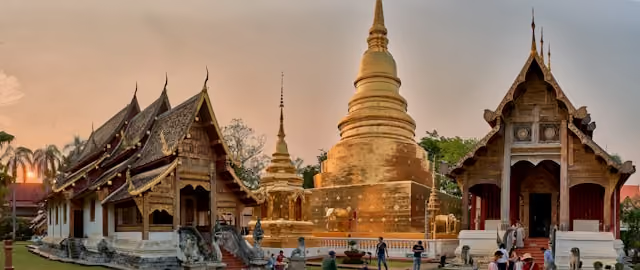
For visitors to Chiang Mai’s celebrated attractions — Doi Suthep temple on the mountain above the city, the Saturday and Sunday Walking Streets at Wualai and Tha Phae roads, the Chiang Mai Night Bazaar, the Old City temples including Wat Chedi Luang and Wat Phra Singh, the Elephant Nature Park north of the city, and the Mae Rim and Mae Sa valley attraction corridor — carrying sealed bottled water is essential. Chiang Mai’s climate ranges from hot and humid in summer (March–May) to pleasantly cool in winter (November–February), but the combination of outdoor activity and touring makes adequate hydration from safe sources important throughout any visit.
For trekking and day trips from Chiang Mai — into Doi Inthanon National Park (Thailand’s highest mountain), to the Long Neck Karen villages in Mae Hong Son province, or into the hills toward Chiang Rai and the Golden Triangle — the same water safety approach applies throughout northern Thailand. In hill tribe villages and rural trekking areas, water safety concerns are more acute than in the city. Carry sufficient sealed bottled water for all trekking days and do not consume water from any stream, well, or rural tap regardless of apparent clarity.
Bottled Water Information
Bottled water is universally available throughout Chiang Mai at every 7-Eleven, Family Mart, and convenience store across the city. Crystal (Coca-Cola Thailand), Singha Drinking Water, and Minere are the most widely available Thai still water brands. A 1.5-litre bottle costs approximately THB 15–25 (around AUD $0.60–$1.10) at convenience stores throughout the Nimmanhaemin Road area, the Old City moat area, Santitham, and the Night Bazaar zone. Water refill stations (bor nam drinking water dispensers) charging THB 1–2 per litre are found throughout residential areas and provide affordable purified water for longer stays.
Is Ice Safe in Chiang Mai?
Ice safety in Chiang Mai requires consistent awareness. At established hotels, rooftop bars, international-standard restaurants, and cafes throughout Nimmanhaemin and the Old City, ice is commercially produced tubular ice from purified water and is safe. At local Thai restaurants, market food stalls, and street food vendors throughout the Night Bazaar, Warorot Market area, and neighbourhood restaurants, ice quality is less certain. The tubular hollow cylindrical shape identifies commercial purified-water ice throughout Thailand. At informal venues — request drinks without ice if you cannot confirm the source.
Should You Use a Water Filter in Chiang Mai?
A portable water filter is a worthwhile investment for visitors planning trekking trips into northern Thailand’s hill areas from Chiang Mai. The GRAYL UltraPress or LifeStraw Peak are effective against the biological contamination profile of Thai tap and surface water. For standard city stays in Chiang Mai where 7-Eleven bottled water is available on every street corner, sealed bottled water remains the most convenient solution. Bor nam refill dispensers — found throughout residential areas — provide an economical purified water source at THB 1–2 per litre for digital nomads and longer-stay visitors.
Should You Boil Tap Water in Chiang Mai?
Boiling Chiang Mai tap water kills biological contaminants and is widely practised by Thai residents as a daily measure. However, boiling does not remove chemical residues or heavy metals from aging pipes. Sealed bottled water is universally available at 7-Eleven and Family Mart stores throughout Chiang Mai at very low cost and is the practical solution for all visitors.
Questions!
Is tap water safe to drink in Chiang Mai?
No. Tap water in Chiang Mai is not safe to drink. Despite treatment by the Provincial Waterworks Authority from the Ping River, aging distribution infrastructure and post-treatment contamination mean the water is not suitable for direct consumption. No resident, digital nomad, or visitor drinks tap water directly in Chiang Mai. Use sealed bottled water for all drinking and tooth brushing throughout your stay.
Is ice safe in Chiang Mai restaurants and cafes?
At established restaurants, hotels, and cafes throughout Nimmanhaemin, the Old City, and the Night Bazaar area, ice is generally commercially produced tubular ice made from purified water and is safe. At informal local restaurants and street food stalls, ice quality is less certain. The hollow cylindrical shape of commercial tubular ice is the reliable indicator of a purified-water source throughout Thailand.
What is the best bottled water brand in Chiang Mai?
Crystal (Coca-Cola Thailand) and Singha Drinking Water are the most widely available Thai still water brands, available at every 7-Eleven and Family Mart across the city. A 1.5-litre bottle costs approximately THB 15–25. Bor nam (water refill dispensers) at THB 1–2 per litre are also found throughout the city and are a cost-effective option for longer stays.
Is water safe on trekking trips from Chiang Mai?
No. Water safety concerns are consistent and more acute in rural northern Thailand than in the city. Never drink from streams, wells, or rural taps during any trekking trip. Carry sufficient sealed bottled water for all trekking days, and confirm your tour operator's water provision before any multi-day hill tribe trek.
Is tap water safe at Doi Suthep temple or other Chiang Mai attractions?
No. Do not drink from any tap at Chiang Mai’s temples, tourist attractions, or public facilities. Sealed bottled water from 7-Eleven and convenience stores is available near all major attractions and is the safe hydration source throughout the city.
We don't conduct independent water testing. We summarise and interpret publicly available official data. Conditions can change rapidly — always verify with local authorities before travelling.
Explore more destinationsThailand
📚 Official Resources & Further Reading
World Health Organization (WHO) – Drinking Water Safety Guidelines
Centers for Disease Control and Prevention (CDC) – Thailand Travel Health Advice
Australian Government – Smartraveller Thailand

.svg)
