

Can You Drink Tap Water in Sarajevo?
Complete Tap Water Safety Guide for Sarajevo
Tap water in Sarajevo has an unusually favourable reputation for a Balkan capital, and for good reason. The city's central water supply draws from Vrelo Bosne — the spring at the source of the Bosna River — which produces exceptionally clean, cold mountain water that requires relatively minimal treatment before distribution. This high-quality source gives Sarajevo's tap water a fresh, pleasant taste that is often better than tap water in many Western European cities. The water authority ViK Sarajevo manages treatment and distribution, and the water meets the standards set by Bosnian national regulations.
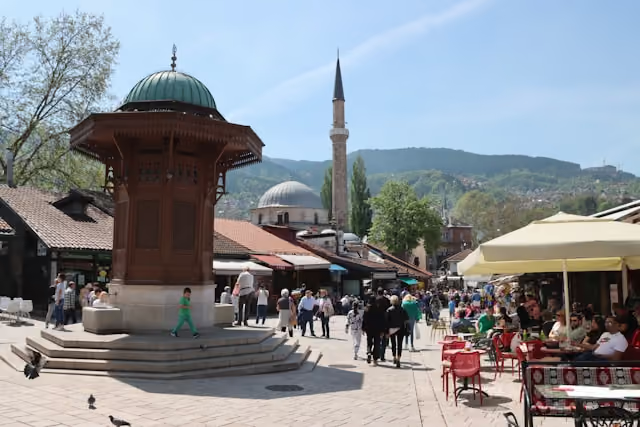
However, Sarajevo's tap water situation is not entirely uniform. The city experienced significant infrastructure damage during the 1992–1995 siege, and while the main distribution network has been substantially rebuilt and upgraded in the decades since, some older residential buildings and outer city districts still have ageing internal plumbing. In these locations, the quality of water at the tap may be affected by old pipes, particularly in apartment buildings that have not been renovated since the pre-war period. Visitors staying in modern hotels in the city centre or in the Baščaršija area can generally drink from the tap without concern.
Bosnia and Herzegovina is not an EU member state, so the water is not formally regulated under the EU Drinking Water Directive, but national standards generally align with WHO guidelines. The country has abundant natural water resources and a long tradition of spring water culture — Bosnian spring water brands are exported across the region and are a point of national pride.
For visitors staying in central Sarajevo in standard tourist accommodation, tap water is generally fine to drink. For those in older buildings, staying in outer suburbs, or who have sensitive stomachs, bottled water is an inexpensive and practical precaution. The local bottled spring water brands are excellent quality and very affordable.
Sarajevo's tap water from its spring source is genuinely one of the better tap water supplies in the Western Balkans. The practical recommendation is to drink it in modern central accommodation and to use bottled water as a precaution in older buildings or if you have any doubt about the building's plumbing.
Bottled Water Information
Bottled water is widely available and very affordable in Sarajevo. A 1.5 litre bottle costs around 1–2 BAM (Bosnian Convertible Mark) at supermarkets and local shops. Bottled water from local Bosnian spring brands such as Jana, Sarajevski Kiseljak, and Aqua Viva is popular. It is available at convenience stores, supermarkets, and cafés throughout the city.
Is ice safe in Sarajevo?
Ice in reputable restaurants and cafes in central Sarajevo is generally safe and produced from the city's spring-sourced municipal water supply. In smaller or budget establishments in outer districts, the water quality may be less consistent, but ice-related illness is not a common concern for visitors to Sarajevo's main tourist areas.
Should you use a water filter in Sarajevo?
A water filter is optional in Sarajevo and most useful for visitors staying in older buildings with potentially aged internal plumbing. In modern central accommodation, the water from the Vrelo Bosne spring source is genuinely good quality and a filter is not necessary.
Should you boil tap water in Sarajevo?
Boiling is not generally required in central Sarajevo where water comes from the high-quality Vrelo Bosne spring system. In outer districts or areas with older infrastructure, boiling adds a useful precaution if you are uncertain about local pipe conditions.
Questions!
Is tap water safe to drink in Sarajevo?
Generally yes in central Sarajevo, where water is supplied from the high-quality Vrelo Bosne spring. In older buildings or outer districts with ageing infrastructure, bottled water is the more cautious choice. Most visitors in standard tourist accommodation can drink from the tap without issue.
Where does Sarajevo's tap water come from?
Sarajevo's primary water supply comes from Vrelo Bosne, the spring at the source of the Bosna River on the slopes of Mount Igman. This natural mountain spring produces exceptionally clean, cold water that gives Sarajevo one of the best tap water sources in the Balkans.
Can I brush my teeth with tap water in Sarajevo?
Yes. Tap water in Sarajevo is safe for brushing teeth throughout the city. Even in areas where drinking from the tap is uncertain, the incidental contact involved in brushing teeth is not a significant risk.
Is ice safe in Sarajevo cafes and restaurants?
Ice in reputable restaurants and cafes in central Sarajevo is generally safe. In smaller establishments or those in outer districts, the water source may be less certain, but ice-borne illness is not a common concern for visitors to Sarajevo.
What bottled water should I buy in Sarajevo?
Local Bosnian spring water brands including Sarajevski Kiseljak and Jana are excellent quality and widely available. A 1.5 litre bottle costs 1–2 BAM at local shops and supermarkets — among the cheapest quality spring water in Europe.
We don't conduct independent water testing. We summarise and interpret publicly available official data. Conditions can change rapidly — always verify with local authorities before travelling.
📚 Official Resources & Further Reading
ViK Sarajevo – Water and Sewage Utility
WHO – Water Sanitation and Health
UK FCDO – Bosnia and Herzegovina Travel Advice
US State Department – Bosnia and Herzegovina Travel Information
NSF International – Water Filter Guide

.svg)
