

Can You Drink Tap Water in Maafushi?
Complete Drinking Water Safety Information for Maafushi
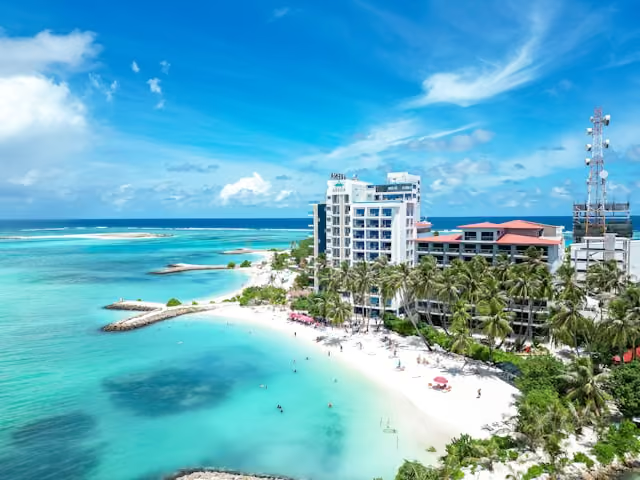
Maafushi is one of the Maldives' most popular inhabited local islands, located in Kaafu Atoll approximately 26 kilometres south of Malé and accessible by speedboat in around 45 minutes. Unlike the Maldives' private resort islands — each of which operates its own dedicated reverse osmosis desalination plant — Maafushi is a functioning Maldivian community of approximately 3,000 permanent residents, supplemented by a growing guesthouse sector that has made it the gateway to the affordable local island experience in the Maldives. The island's water supply is managed through a combination of reverse osmosis desalination of seawater and rainwater collection, distributed through a local pipe network. Tap water on Maafushi is not safe to drink and is not consumed by island residents or visitors at any guesthouse or cafe.
The water situation on Maafushi reflects the broader challenge of inhabited island water infrastructure throughout the Maldives. While the Maldives Water and Sewerage Company (MWSC) operates desalination facilities across inhabited islands, the scale and sophistication of the systems on local islands like Maafushi is considerably less than what major resort islands maintain. The desalinated water produced has the characteristic flat, mineral-deficient profile of reverse osmosis output, and distribution through the island's pipe network — which serves both residential and guesthouse properties along the main beach road and interior streets — can introduce variability in quality. During the dry season (January–April), when rainwater reserves are depleted, the island relies more heavily on desalination, and supply pressure can fluctuate.
Guesthouses on Maafushi — which range from budget air-conditioned rooms a short walk from the bikini beach to mid-range properties with pool access — all provide sealed bottled water for guests as the drinking standard. No guesthouse on Maafushi presents tap water as a drinking option. The tap in bathroom facilities at all properties is for bathing, showering, and washing only. This is the same standard maintained across all inhabited local islands in the Maldives, from Maafushi in the south of Kaafu Atoll to Dhigurah in Ari Atoll and Fulidhoo in Vaavu Atoll.
Visitors to Maafushi typically spend their time at the island's designated bikini beach (for non-Maldivian visitors), on snorkel and dive excursions to nearby house reefs and dive sites including the famous Guraidhoo Corner and Cocoa Corner, and on sandbank picnic day trips. For all water-based activities and excursions, carrying sufficient sealed bottled water is essential. Snorkel and dive excursion boats from Maafushi typically provide water, but confirming this with your operator before departure is advisable. The equatorial heat and high humidity of the Maldives — consistent year-round at 30°C+ — means hydration needs are significant throughout any active day.
The practical approach for a Maafushi stay: stock up on bottled water from the guesthouse or a local shop on arrival, carry a portable filter bottle as a backup for longer excursions, and treat all tap water on the island as suitable for bathing only. The same approach applies if island-hopping from Maafushi to other local islands in South Male Atoll — Guraidhoo, Gulhi, and Mahibadhoo — where water infrastructure is similarly limited. Sealed bottled water is the universal drinking standard throughout the Maldivian local island circuit.
Bottled Water Information
Bottled water is available on Maafushi at every guesthouse and at the island's small shops along the main beach road, but selection is more limited and prices are notably higher than in Malé due to the logistics of supplying an inhabited island. Sealed still water is available in 500ml and 1.5-litre formats — expect to pay MVR 10–25 (approximately AUD $0.90–$2.20) per 1.5-litre bottle depending on the vendor. Some guesthouses include bottled water in their room rate; others charge separately. Buying a supply of larger-format bottles upon arrival at your guesthouse is the most practical approach. If travelling to nearby uninhabited sandbanks or snorkel excursions from Maafushi, carry sufficient sealed water for the entire trip as no facilities exist at day excursion sites.
Is Ice Safe in Maafushi?
Ice safety in Maafushi requires caution. At established guesthouse restaurants and tourist-facing cafes along the main beach road, ice is generally produced from purified or filtered water and is acceptable. At smaller local shops, traditional Maldivian cafes, and less formal eateries serving the island's resident community, ice quality is less certain. The practical approach on Maafushi: request beverages without ice at any local establishment where you cannot confirm the source, and consume iced drinks only at your own guesthouse or at well-established tourist cafes on the main strip.
Should You Use a Water Filter in Maafushi?
A portable water filter is a practical and worthwhile investment for budget travellers planning extended stays across multiple Maldivian local islands. A filter bottle such as the GRAYL UltraPress or LifeStraw Peak effectively addresses the biological contamination profile of local island tap water and reduces reliance on single-use plastic bottles — an environmental consideration of real significance in a coral atoll nation. For a standard week-long guesthouse stay on Maafushi, sealed bottled water purchased locally is the more convenient solution. A filter becomes particularly valuable for island-hopping itineraries where bottled water supply is intermittent and prices are variable.
Should You Boil Tap Water in Maafushi?
Boiling Maafushi tap water at a rolling boil for one minute addresses biological contamination risks but does not resolve the flat, mineralless profile of desalinated water or any chemical residues in the distribution system. Given the universal availability of bottled water at Maafushi's guesthouses and shops — albeit at higher prices than in Malé — boiling is best treated as an emergency backup rather than a routine practice. Portable filter bottles are a more practical solution for budget travellers staying on local islands for extended periods.
Questions!
Is tap water safe to drink in Maafushi?
No. Tap water in Maafushi is not safe to drink. The island relies on reverse osmosis desalination and rainwater collection through a local pipe network, and the water is not considered suitable for consumption by residents or guesthouse visitors. Use only sealed bottled water for all drinking and tooth brushing throughout your stay.
Do Maafushi guesthouses provide safe drinking water?
Yes — all guesthouses on Maafushi provide sealed bottled water for guests, either included in the room rate or available for purchase. Tap water in guesthouse bathrooms is for bathing only. Stock up on bottled water from your guesthouse or a local shop on arrival and carry sufficient supply for excursions.
Is ice safe at Maafushi restaurants and cafes?
Use caution. At established guesthouses and tourist-facing cafes on Maafushi's main beach road, ice quality is generally acceptable. At smaller local establishments and island cafes, the ice source is less certain. When in doubt, request drinks without ice or consume beverages at ambient temperature.
What bottled water is available on Maafushi?
Sealed still water is available in 500ml and 1.5-litre formats at guesthouses and local shops along the beach road. Expect to pay MVR 10–25 per 1.5-litre bottle — higher than in Malé due to island supply logistics. Carry extra sealed water when heading out on snorkel excursions or sandbank day trips where facilities are absent.
Is the water situation the same on other Maldives local islands?
Yes. Tap water is not safe to drink on any inhabited local island in the Maldives, including Dhigurah, Fulidhoo, Thoddoo, Guraidhoo, and Mahibadhoo. All rely on combinations of desalination and rainwater collection with variable quality. Sealed bottled water is the universal drinking standard across the entire local island circuit.
We don't conduct independent water testing. We summarise and interpret publicly available official data. Conditions can change rapidly — always verify with local authorities before travelling.
📚 Official Resources & Further Reading
World Health Organization (WHO) – Drinking Water Safety Guidelines
Centers for Disease Control and Prevention (CDC) – Maldives Travel Health Advice
Australian Government – Smartraveller Maldives

.svg)
