


Can You Drink Tap Water in Santorini?
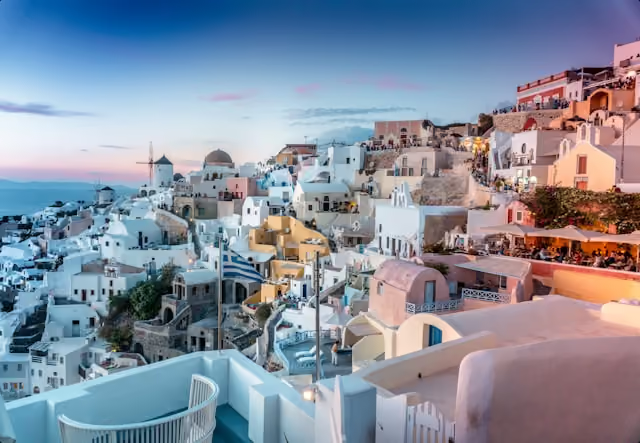
Complete Drinking Water Safety Information for Santorini
Santorini's tap water situation is one of the most distinctive in the Mediterranean and is frequently misunderstood by visitors. The island has essentially no natural freshwater sources — no rivers, no lakes, and very limited groundwater — and has historically relied on rainfall collection and water transported by tanker from the mainland. Since the 1990s, Santorini has increasingly relied on desalination plants as the primary water source. The island's municipal water authority (DEYAAS) operates desalination facilities that convert seawater into drinking water, which is then distributed through the island's pipe network. This water is technically treated and meets Greek national standards, but those standards are less stringent than WHO international guidelines in some parameters.
The key issue for visitors is not biological safety — Santorini's water is generally free from the bacterial and parasitic contamination that makes tap water dangerous in developing destinations. Rather, the concerns are taste, mineral consistency, and the practical reality that even Greek residents of Santorini largely do not drink tap water directly. Desalinated water often tastes flat or metallic, lacking the mineral profile that makes natural spring water palatable. The pipe infrastructure on the island, particularly in older village areas and during peak tourist season when water pressure and demand fluctuate significantly, can also introduce sediment and taste variations. During the height of summer (July–August), the desalination plants operate at maximum capacity and quality can be less consistent.
The situation varies by area and accommodation type. In Fira (the capital), Oia, Imerovigli, and Firostefani — Santorini's main tourist corridor along the caldera rim — most upscale hotels and boutique cave houses filter their water or provide complimentary bottled water, often including premium still or sparkling options. In the beach resorts of Perissa and Perivolos on the island's eastern coast, standard accommodation tends to rely on municipal supply without additional filtration. In quieter villages such as Akrotiri, Pyrgos, and Megalochori, the infrastructure is adequate but drinking from the tap is still not the recommended approach.
For the vast majority of Santorini visitors, the practical answer is simple: drink bottled water throughout your stay. This is what virtually all Greeks living on Santorini do, and what the local hospitality industry expects. Bottled water brands such as Zagori, Loutraki, and Avra are available at every supermarket, mini-market, and most hotel receptions at reasonable cost. Unlike truly unsafe water destinations, forgetting this precaution in Santorini is unlikely to make you seriously ill — but the taste experience is poor and the sensible approach is to use bottled water for drinking and tap water for bathing and washing only.
Santorini's water scarcity also means visitors should be mindful of water conservation. The island imports supplementary freshwater by tanker during peak season, and water is a genuinely precious and expensive resource on the island. Taking shorter showers, reusing towels, and avoiding unnecessary water use is both environmentally responsible and consistent with how many island residents approach their own water consumption. Using a reusable bottle and refilling from purchased large-format bottles is the most practical and waste-conscious approach for visitors.
Bottled Water Information
Bottled water is very widely available across Santorini and is the recommended drinking water for all visitors. Greek national brands including Zagori, Loutraki, Avra, and ΝΕΡΟ brands are available at supermarkets such as AB Vassilopoulos and local mini-markets throughout Fira, Oia, Imerovigli, Akrotiri, and Perissa. Smaller local markets in quieter villages also stock standard brands reliably. A 1.5-litre bottle costs approximately €1.20–€2.50, with prices at tourist-area cafés and restaurants somewhat higher. For villa or apartment stays, buying in bulk from a supermarket is more economical. Some upscale hotels and cave houses in Oia and Imerovigli provide complimentary filtered still or sparkling water for guests as a premium amenity, which is worth asking about at check-in.
Is Ice Safe in Santorini?
Ice in Santorini is generally safe at all standard tourist establishments. Unlike destinations where tap water carries biological contamination risks, Santorini's municipal supply — though desalinated and not ideal for direct drinking due to taste — is treated and does not carry the bacteria and parasites that make ice genuinely dangerous in other parts of the world. Hotels, restaurants, bars, and beach clubs across Fira, Oia, Imerovigli, and Perissa all use standard municipal or filtered water for ice production without reports of illness. This is one area where Santorini meaningfully differs from destinations like Marrakech or Cancún — the conditional nature of the water verdict does not extend to ice safety, which is not a practical concern for visitors.
Should You Use a Water Filter in Santorini?
A water filter is optional but useful for Santorini stays, particularly for visitors who prefer not to rely entirely on single-use plastic bottles. A simple activated carbon filter jug or countertop filter can significantly improve the taste of Santorini's desalinated tap water, making it more palatable for brushing teeth and light use. For drinking, a GRAYL or LifeStraw bottle will work but is somewhat over-engineered for Santorini's specific situation — the island's risks are taste and mineral quality rather than biological safety. The most practical solution for most visitors is simply purchasing a large-format (5 or 8-litre) bottle of still water from a supermarket on arrival and using it throughout the stay, refilling a reusable bottle to carry out during the day.
Should You Boil Tap Water in Santorini?
Boiling Santorini's tap water at a rolling boil for one minute would address biological contamination risks. However, the primary concerns with Santorini's tap water are not biological but rather related to taste, mineral content, and the consistency of the desalination process. Boiling does not improve the taste of desalinated water and can concentrate residual minerals and salt. For short-stay visitors, bottled water is far more practical. Boiling is not a standard practice among Santorini residents or long-term visitors, and is not needed given the wide availability of affordable bottled water across the island.
Questions!
Is tap water safe to drink in Santorini?
Technically it meets Greek national standards, but most visitors and locals do not drink it directly. Santorini relies on desalinated seawater for its municipal supply, which is treated but often tastes flat or metallic. Bottled water is strongly recommended for drinking throughout your stay. The risk of serious illness is low, but the taste and quality consistency are not reliable enough to recommend tap water for visitors.
Why does Santorini rely on desalinated water?
Santorini is a volcanic island with virtually no natural freshwater sources — no rivers or lakes, and very limited groundwater. The island has historically relied on rainwater collection and mainland water deliveries by tanker. Since the 1990s, desalination of seawater has become the primary municipal water source, supplemented by tanker deliveries during peak summer months when tourist demand dramatically increases.
Is ice safe in Santorini?
Yes, ice in Santorini restaurants, bars, and hotels is generally safe. The island's municipal water, while not ideal for drinking directly, is treated and free from the biological contamination found in developing-world destinations. Commercial ice production using this supply does not pose a meaningful health risk, and there are no reports of widespread ice-related illness in Santorini.
What bottled water brands are available in Santorini?
Zagori, Loutraki, and Avra are the most widely available Greek bottled water brands, sold at supermarkets and mini-markets throughout Fira, Oia, Imerovigli, Perissa, and other main areas. A 1.5-litre bottle costs approximately €1.20–€2.50 at retail. Some luxury hotels and cave houses in Oia provide complimentary premium bottled water for guests.
Should I conserve water in Santorini?
Yes, water conservation is genuinely important on Santorini. The island has extremely limited natural freshwater, imports supplementary water by tanker during summer, and operates desalination at high cost. Taking shorter showers, reusing towels, and using a reusable bottle to minimise single-use plastic are all meaningful contributions, consistent with how local residents approach their own water use on the island.
We don't conduct independent water testing. We summarise and interpret publicly available official data. Conditions can change rapidly — always verify with local authorities before travelling.
Explore more destinationsGreece
📚 Official Resources & Further Reading
World Health Organization (WHO) – Drinking Water Safety Guidelines
Centers for Disease Control and Prevention (CDC) – Greece Travel Health Advice
Australian Government – Smartraveller Greece

.svg)
