

Can You Drink Tap Water in Greece?
Tap water in Greece is safe to drink on the mainland and most islands, meeting EU safety standards.
Complete Drinking Water Safety Information for Greece
Tap water in Greece is generally safe to drink on the mainland and most major islands, meeting European Union water quality standards. In Athens, Thessaloniki, and other mainland cities, tap water is treated to EU standards and safe for consumption. Most Greeks in urban areas drink tap water and visitors can do the same. Athens' water comes from Marathon Lake and Mornos reservoirs, is comprehensively treated, and meets all safety requirements. On popular islands including Crete, Rhodes, Corfu, and Mykonos, tap water is treated and generally safe.
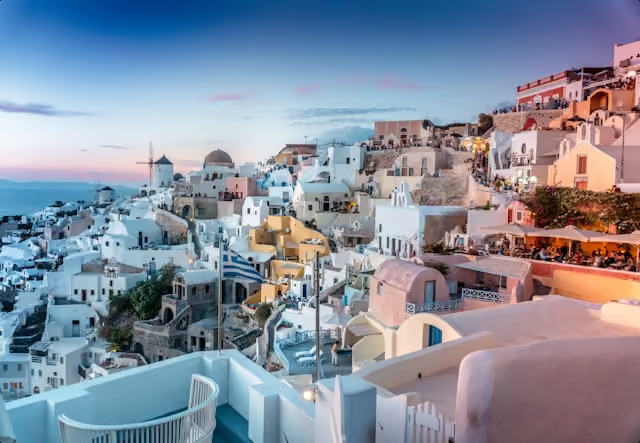
However, some smaller Greek islands face water scarcity and rely on desalination, water tankers, or limited local sources. On these islands, water quality can vary and many hotels recommend bottled water as a precaution. Santorini, despite being a major tourist destination, has limited freshwater and relies heavily on desalination. While treated water is technically safe, many accommodations provide bottled water due to taste and mineral content. On Paros, Naxos, Ios, and other Cycladic islands, verify water safety with your accommodation as infrastructure varies.
Mainland areas including the Peloponnese, northern Greece, and mountain regions have safe tap water meeting EU standards. In rural villages and remote areas, water may come from local springs which are generally safe but quality can vary. Throughout Greece, hotels in tourist areas often provide bottled water as a courtesy even where tap water is safe. The Mediterranean climate and island geography mean water scarcity affects some regions, but this doesn't necessarily indicate safety issues.
When in doubt on smaller islands, use bottled water which is readily available and affordable.
Bottled Water information in Greece

Bottled water is very affordable (€0.30-€0.80 per liter) and available everywhere including supermarkets, periptera (kiosks), mini-markets, and tourist areas. Popular brands include Avra, Loutraki, and Vikos. Essential on smaller islands; optional on mainland.
Is ice safe in Greece?
Ice is safe in Athens, Thessaloniki, and mainland Greece in hotels and restaurants. On major islands like Crete and Rhodes, ice is generally safe. On smaller islands with water concerns, ice should be verified or avoided if uncertain about water source.
Can you use a water filter in Greece?
Water filters are not necessary on mainland Greece. On Greek islands where water quality varies or desalination is used, some visitors use portable filters for taste and peace of mind, but bottled water is more common.
Should you boil tap water in Greece?
Boiling is not necessary on mainland Greece where water meets EU standards. On smaller islands with uncertain water quality or desalination, boiling is optional. Most tourists use bottled water on islands rather than boiling.
Questions!
Can you drink tap water in Athens?
Yes. Athens tap water is technically safe to drink and meets EU standards, but many locals and visitors prefer bottled water due to taste and older pipe infrastructure in parts of the city.
Is tap water safe on Greek islands like Santorini and Mykonos?
Not always. Many Greek islands have limited freshwater and rely on desalination or water transported by tanker. On islands like Santorini, Mykonos, and Rhodes, tap water is often not recommended for drinking. Check with your accommodation.
Is tap water safe on Crete?
Crete has its own water supply and tap water in major towns like Heraklion and Chania is generally safe, though many residents still prefer bottled water. Quality varies across the island.
We don't conduct independent water testing. We summarises and interpret publicly available official data. Conditions can change rapidly — always verify with local authorities before travelling.
Explore all popular destinations inGreece
Explore more countries in Europe
Complete tap water safety guides for European countries, covering Western Europe, Eastern Europe, Southern Europe, and Northern Europe.



📚 Official Resources & Further Reading
World Health Organization – Greece Water Quality
European Environment Agency – Water Standards
Greece Ministry of Health
CDC – Greece Travel Information
Greek Water Authority EYDAP

.svg)
