

Can You Drink Tap Water in Dubrovnik?
Complete Drinking Water Safety Information for Dubrovnik
Dubrovnik's tap water is safe to drink and is supplied by Vodovod Dubrovnik from one of Europe's most remarkable natural water sources — the Ombla spring (Vrelo Omble), located just 3 kilometres northeast of the old city near the village of Komolac. The Ombla is one of the most powerful springs in Europe, discharging an average of 24 cubic metres of water per second from a massive karst underground river system fed by the Trebisnjica River network in the Dinaric Alps of Bosnia and Herzegovina. The spring emerges from the base of a limestone cliff and flows directly into the sea-connected Ombla estuary — a UNESCO-protected natural monument. This extraordinary karst spring source produces naturally cold, mineral-rich, exceptionally pure water that undergoes minimal treatment — filtration, UV sterilisation, and chlorination — before distribution throughout the Dubrovnik-Neretva county water network.
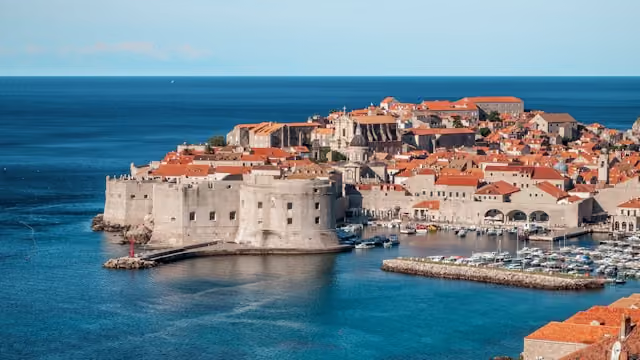
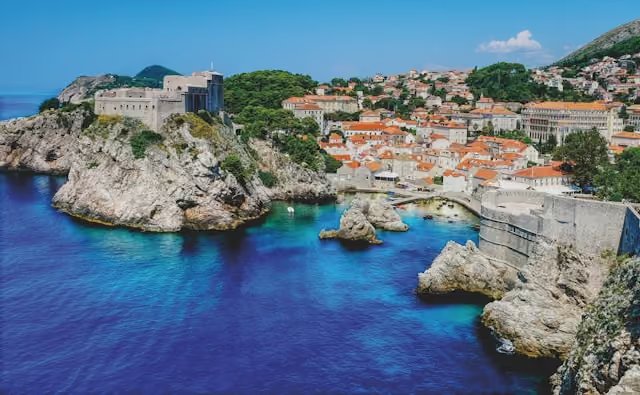
The water quality is consistent throughout Dubrovnik's visitor areas. Inside the famous old city walls — one of the world's best-preserved medieval fortifications and a UNESCO World Heritage Site — all taps, restaurants, and the city's historic Onofrio's Fountain (both the Large Onofrio Fountain near the Pile Gate and the Small Onofrio Fountain near the Rector's Palace) are supplied from the same Vodovod Dubrovnik network. The Large Onofrio Fountain, constructed in 1438 as part of the city's original water supply system and still functioning today, dispenses the same safe Ombla spring water. Drinking from the fountain's lion-head spouts is a time-honoured Dubrovnik tradition that is completely safe. Hotels throughout the Lapad Peninsula, Banje Beach area, Ploce, and the Babin Kuk resort zone north of the city all draw from the same supply.
Dubrovnik's popularity as a tourist destination — it receives around 1.5 million visitors annually, an extraordinary number for a city of only 42,000 permanent residents — means its restaurants, bars, and cafes inside the old city walls charge premium prices for everything including bottled water. A bottle of water inside the old city can cost several times the supermarket price. Carrying a reusable bottle and refilling at hotel taps, public drinking fountains throughout the city, or from the Onofrio Fountain is the most practical, cost-effective, and sustainable hydration approach for any Dubrovnik visit. The tap water is completely safe and free.
The old city's famous Stradun (Placa) main street, the baroque Rector's Palace, the Church of St Blaise, the Sponza Palace, and the city walls walk are all within the old city where free tap water is freely available from numerous points. Lokrum Island — accessible by ferry from the old port and one of Dubrovnik's most popular day trips for swimming and exploring the botanical garden — has limited water facilities; carrying a full reusable bottle from the mainland is advisable for any Lokrum visit.
For visitors on day trips from Dubrovnik to the Elaphiti Islands (Kolocep, Lopud, and Sipan), Montenegro (Kotor), or the Peljesac Peninsula wine region, tap water is equally safe throughout Croatia and in Kotor, Montenegro. Croatia has one of the highest tap water quality compliance rates in the EU since joining in 2013, and its karst spring system produces some of Europe's purest natural water. Visitors can drink confidently from taps throughout any Croatian itinerary.
Bottled Water Information
Bottled water is widely available throughout Dubrovnik but entirely unnecessary for health reasons. Jana, sourced from the Plitvice Lakes region of Croatia and one of Europe's finest natural still mineral waters, is Croatia's most popular bottled water brand and available at every Konzum, Studenac, and Tommy supermarket across the city. Jamnica (sparkling) is the leading Croatian sparkling mineral water. A 1.5-litre bottle costs approximately HRK 8–15 (around AUD $1.60–3.00) at supermarkets, rising considerably at tourist-area restaurants and bars within the old city walls. Buying bottled water at the Pile Gate supermarkets rather than inside the old city saves significant money for visitors staying multiple days.
Is Ice Safe in Dubrovnik?
Ice in Dubrovnik is completely safe at all establishments without exception. Vodovod Dubrovnik's Ombla spring supply is free from biological contamination and meets EU Drinking Water Directive standards throughout the city. Ice at every restaurant on the Stradun, rooftop bar overlooking the old city walls, beach bar at Banje Beach, and hotel in Lapad and Babin Kuk is completely safe. Ice quality is not a consideration for any visitor anywhere in Dubrovnik.
Should You Use a Water Filter in Dubrovnik?
A water filter is completely unnecessary in Dubrovnik. Vodovod Dubrovnik's Ombla karst spring supply consistently meets EU Drinking Water Directive standards, and the naturally mineral-rich, cold spring water is clean and pleasant to drink directly from any tap. Carry a reusable bottle and refill freely at hotel taps, restaurant taps, or the historic Onofrio Fountain inside the old city walls — particularly given the significant price premium on bottled water inside the old city.
Should You Boil Tap Water in Dubrovnik?
Boiling Dubrovnik's tap water is entirely unnecessary. Vodovod Dubrovnik's Ombla spring supply meets EU Drinking Water Directive standards with no biological safety concerns. The water is clean, fresh, and pleasant to drink directly from any tap. No Dubrovnik resident boils tap water as a safety measure.
Questions!
Is tap water safe to drink in Dubrovnik?
Yes, completely. Dubrovnik's tap water is supplied by Vodovod Dubrovnik from the Ombla spring — one of Europe's most powerful karst springs — and meets EU Drinking Water Directive standards. It is completely safe to drink from any tap, hotel room, or public fountain throughout the city and the wider region.
Is the water from Onofrio's Fountain in Dubrovnik safe to drink?
Yes. Both the Large Onofrio Fountain near the Pile Gate and the Small Onofrio Fountain near the Rector's Palace dispense the same safe Vodovod Dubrovnik municipal supply from the Ombla spring. Drinking from the lion-head spouts of the Large Onofrio Fountain is a Dubrovnik tradition and is completely safe.
Why is bottled water so expensive inside Dubrovnik's old city?
Inside the old city walls, restaurants, bars, and shops charge premium tourist prices for everything. A bottle of water that costs HRK 8–15 at a supermarket outside the walls can cost 3–5 times more inside. The solution is to carry a reusable bottle from your hotel and refill freely at taps or the Onofrio Fountain — the tap water is safe and free.
Is ice safe in Dubrovnik restaurants and bars?
Yes, completely. Vodovod Dubrovnik's Ombla spring supply is free from biological contamination and meets EU safety standards throughout the city. Ice at every restaurant on the Stradun, rooftop bar overlooking the old city walls, and hotel in Lapad is completely safe.
Is tap water safe on the Elaphiti Islands and day trips from Dubrovnik?
Yes. Tap water is safe throughout Croatia including on the Elaphiti Islands (Kolocep, Lopud, and Sipan) and on the Peljesac Peninsula. Croatia has one of the highest tap water quality compliance rates in the EU. On ferry day trips, carrying a full reusable bottle is practical as facilities on smaller islands can be limited.
We don't conduct independent water testing. We summarise and interpret publicly available official data. Conditions can change rapidly — always verify with local authorities before travelling.
Explore more destinationsCroatia
📚 Official Resources & Further Reading
World Health Organization (WHO) – Drinking Water Safety Guidelines
Centers for Disease Control and Prevention (CDC) – Croatia Travel Health Advice
Australian Government – Smartraveller Croatia

.svg)
