

Can You Drink Tap Water in Croatia?
Tap water in Croatia is safe to drink throughout most of the country and meets EU safety standards.
Complete Drinking Water Safety Information for Croatia
Tap water in Croatia is generally safe to drink throughout most of the country and meets European Union water quality standards. In Zagreb, Split, Dubrovnik, Zadar, and other Croatian cities, tap water is treated to EU standards and safe for consumption. Most Croatians drink tap water and visitors can do the same confidently. Zagreb's tap water comes from groundwater sources north of the city and is of excellent quality. Croatia's Adriatic coast including Split, Dubrovnik, Zadar, and Šibenik has safe tap water that meets EU standards.
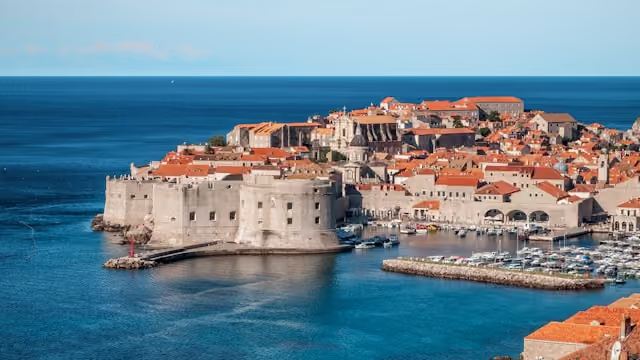
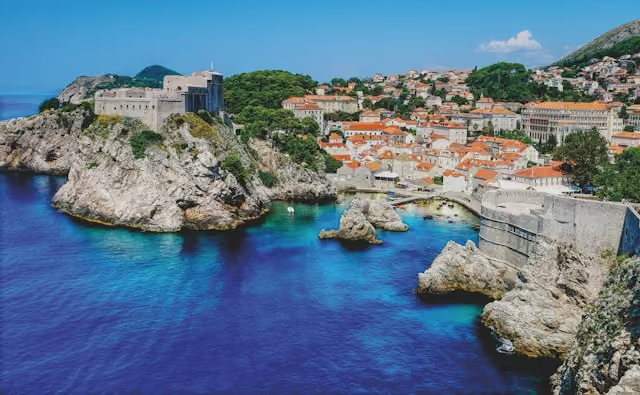
Some coastal areas use desalination or bring water from mainland sources. Dubrovnik's tap water is safe despite the city being on a rocky peninsula with limited local sources. Popular islands including Hvar, Brač, Korčula, and Krk have treated tap water that is generally safe. However, some smaller islands have limited infrastructure and water is brought by tanker or desalinated.
It's worth verifying with your accommodation on smaller islands. Plitvice Lakes, Istria (including Pula, Rovinj, and Poreč), and inland Croatia have safe tap water throughout. Rijeka and the northern coast have excellent water quality. In rural areas and small villages, water quality generally remains good as Croatia's EU membership ensures standards are maintained.
Some older buildings in historic city centers may have aging pipes, but mains water is safe. Throughout most of Croatia, tap water can be used for drinking, brushing teeth, making ice, and cooking. Many Croatian hotels provide bottled water as courtesy but tap water is safe. Some visitors prefer bottled water on smaller islands or for taste preferences.
Bottled Water information in Croatia

Bottled water is affordable (5-10 HRK or €0.70-€1.30 per liter) and available at all supermarkets (Konzum, Lidl, Tommy), kiosks, and tourist areas. Popular brands include Jana and Jamnica. Generally safe to drink tap water in major areas; bottled water optional.
Is ice safe in Croatia?
Ice is safe in Croatian cities and major coastal resort areas. Ice in Zagreb, Split, Dubrovnik, and established tourist restaurants is made from treated water. On smaller islands, verify ice safety if you have concerns.
Can you use a water filter in Croatia?
Water filters are not necessary in most of Croatia as tap water meets EU standards. On smaller islands where water quality varies, some visitors use portable filters, but bottled water is more common.
Should you boil tap water in Croatia?
Boiling is not necessary in Croatian cities and major tourist areas where water meets EU standards. On very small islands with limited infrastructure, boiling provides extra precaution if uncertain, but most tourists use bottled water instead.
Questions!
Can you drink tap water in Dubrovnik?
Yes. Dubrovnik's tap water is safe to drink. The city has a reliable municipal supply and visitors can drink from the tap without concern.
Is tap water safe on Croatian islands like Hvar and Brač?
Generally yes, though water on some smaller islands is more limited and can occasionally have a stronger taste due to desalination or older local systems. Drinking from the tap is usually fine but bottled water is a reasonable option on remote islands.
Can you drink tap water in Split and Zagreb?
Yes. Both Split and Zagreb have safe, well-treated tap water. Zagreb in particular is known for excellent water quality sourced from underground springs.
We don't conduct independent water testing. We summarises and interpret publicly available official data. Conditions can change rapidly — always verify with local authorities before travelling.
Explore all popular destinations inCroatia
Explore more countries in Europe
Complete tap water safety guides for European countries, covering Western Europe, Eastern Europe, Southern Europe, and Northern Europe.




📚 Official Resources & Further Reading
World Health Organization – Croatia Water Quality
European Environment Agency – Water Standards
Croatia Ministry of Health
CDC – Croatia Travel Information
Croatian Water Utilities

.svg)
