

Can You Drink Tap Water in Koh Samui?
Complete Drinking Water Safety Information for Koh Samui
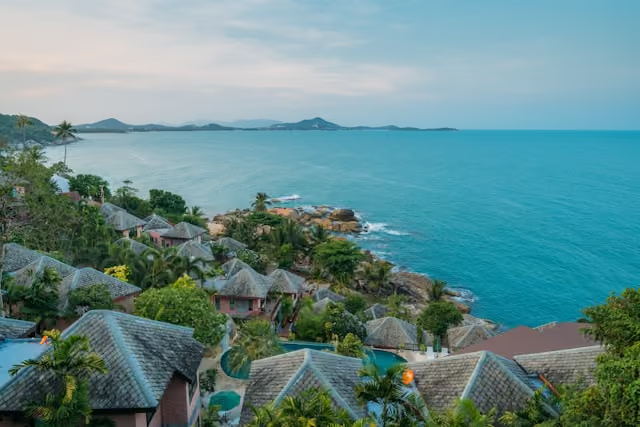
Tap water in Koh Samui is not safe to drink and this applies throughout the entire island — Chaweng Beach, Lamai Beach, Bo Phut (Fisherman’s Village), Mae Nam, Choeng Mon, and Nathon (the main town). Unlike Thailand’s mainland cities, Koh Samui does not have a single integrated centralised water treatment and distribution system. The island’s water supply is managed through a fragmented combination of sources: underground wells drawing from the island’s aquifer, collected rainwater, surface water from streams and reservoirs in Koh Samui’s hilly interior, and water imported from the mainland by tanker and increasingly through a submarine pipeline from Surat Thani province on the Gulf of Thailand coast. The Provincial Waterworks Authority (PWA) operates distribution infrastructure across the island but the quality of water reaching any given tap is highly variable depending on source, infrastructure age, and local storage conditions.
The fundamental challenge for Koh Samui’s water supply is the island’s geography and development history. Koh Samui is a relatively small island — approximately 228 square kilometres — that has experienced explosive tourism-driven development over the past four decades, transforming from a coconut farming backwater to one of Southeast Asia’s most visited resort islands. This development pace has dramatically outpaced water infrastructure investment. The island’s aquifer has been heavily stressed by extraction from thousands of hotel, villa, and residential wells, leading to saltwater intrusion in coastal areas — particularly around Chaweng and Lamai, the island’s two most densely developed beach strips. In areas where aquifer water has been compromised by saline intrusion, the tap water can have a brackish, salty quality that is immediately detectable and clearly not suitable for consumption.
The water quality picture varies considerably across the island’s different zones. In Chaweng — the busiest tourist area, with the highest density of hotels, beach clubs, bars, and restaurants — many larger resort properties and international hotel brands have installed their own reverse osmosis or multi-stage filtration systems to produce potable water for guests, bypassing the PWA mains supply for drinking purposes. These internal hotel systems produce safe water and sealed bottled water is additionally provided in all guest rooms. In Bo Phut’s Fisherman’s Village, a popular upscale area with boutique hotels and restaurants along the north coast, and in Mae Nam’s quieter beach strip, the same general approach applies — rely on sealed bottled water or hotel-provided water, not the tap.
Koh Samui’s villa rental sector — which accounts for a significant proportion of visitor accommodation, particularly in the premium hillside and beachfront villa market around Choeng Mon, Plai Laem, and the northern cape — generally provides sealed bottled water for guests and often has large-format 20-litre dispenser systems. Villa guests should confirm the drinking water provision with their property manager on arrival and should not assume that any villa’s tap supply is suitable for drinking. Rural and inland areas of the island, including communities around the Hin Ta and Hin Yai rock formations in the Lamai area and the interior highlands, have less infrastructure and more variable water quality.
Visitors exploring Koh Samui’s beaches, making day trips by ferry to the neighbouring islands of Koh Phangan and Koh Tao, or visiting the Ang Thong Marine National Park should carry sufficient sealed bottled water for all activities. Water quality concerns extend to both Koh Phangan and Koh Tao, which have similar or more severe water infrastructure limitations than Koh Samui itself. Crystal, Singha Drinking Water, and Minere branded bottles are available at 7-Eleven and Family Mart stores throughout Koh Samui and at the ferry terminals for inter-island travel.
Bottled Water Information
Bottled water is universally available across Koh Samui at every 7-Eleven, Family Mart, Tesco Lotus Express, and resort minimarket on the island. Crystal, produced by Coca-Cola Thailand, is the most widely available Thai still water brand across the island. Singha Drinking Water, Minere, and Sprinkle are also widely available. A 1.5-litre bottle costs approximately THB 15–25 (around AUD $0.60–$1.10) at convenience stores in Chaweng, Lamai, and Bophut, rising at beach club minimarkets and resort shops. Large-format 20-litre water dispenser deliveries are standard at villa and longer-stay accommodation across the island.
Is Ice Safe in Koh Samui?
Ice safety in Koh Samui requires consistent awareness. At established resort hotels, beach clubs, and tourist-facing restaurants in Chaweng, Lamai, Bo Phut’s Fisherman’s Village, and Choeng Mon, ice is generally produced from purified or reverse osmosis-filtered water and is safe. At smaller local Thai restaurants, market stalls, and informal vendors throughout Nathon town and the island’s interior, ice quality is less certain and caution is warranted. The practical rule: well-established tourist venues — safe; local markets and informal stalls — request without ice.
Should You Use a Water Filter in Koh Samui?
A portable water filter is a practical addition for villa stays or longer Koh Samui visits where relying on single-use bottled water becomes expensive or environmentally concerning. The GRAYL UltraPress and LifeStraw Peak are effective against the biological and chemical contamination profile of Koh Samui’s well and aquifer water. For standard resort hotel stays where sealed bottled water is provided as standard, a filter is unnecessary. For island-hopping trips to Koh Phangan and Koh Tao, a filter bottle provides reliable backup where bottled water supply is less consistent.
Should You Boil Tap Water in Koh Samui?
Boiling Koh Samui tap water kills biological contaminants but does not address the salinity, mineral content, or chemical residues that can affect the island's well and groundwater-sourced supply. Given the universal availability of bottled water across all Koh Samui accommodation and shops, boiling is best treated as an emergency measure rather than a routine practice for visitors.
Questions!
Is tap water safe to drink in Koh Samui?
No. Tap water in Koh Samui is not safe to drink. The island’s water supply is a fragmented combination of stressed aquifer wells, rainwater, and mainland imports with no centralised reliable treatment system. All visitors should rely on sealed bottled water for all drinking and tooth brushing throughout their stay.
Why is Koh Samui’s water supply so problematic?
Koh Samui’s rapid tourism development over four decades has dramatically outpaced water infrastructure investment. The island’s aquifer has been over-extracted, leading to saltwater intrusion in coastal areas particularly around Chaweng and Lamai. The result is a tap supply that varies from variable quality to noticeably brackish depending on location and season.
Is ice safe in Koh Samui beach clubs and restaurants?
At established beach clubs, resort restaurants, and tourist-facing venues in Chaweng, Lamai, and Bo Phut, ice is generally produced from purified or filtered water and is safe. At small local restaurants, market stalls, and informal vendors, ice quality is less certain. When in doubt, request drinks without ice.
What bottled water brands are available in Koh Samui?
Crystal (Coca-Cola Thailand) is the most widely available still water brand across the island. Singha Drinking Water, Minere, and Sprinkle are also commonly stocked. A 1.5-litre bottle costs approximately THB 15–25 at 7-Eleven and Family Mart stores throughout Chaweng, Lamai, and Bophut.
Is the water safe on Koh Phangan and Koh Tao from Koh Samui?
No. Koh Phangan and Koh Tao have similar or more severe water infrastructure limitations than Koh Samui. Tap water on both islands is not safe to drink. Carry sufficient sealed bottled water for any day trip or multi-day stay on either island.
We don't conduct independent water testing. We summarise and interpret publicly available official data. Conditions can change rapidly — always verify with local authorities before travelling.
Explore more destinationsThailand
📚 Official Resources & Further Reading
World Health Organization (WHO) – Drinking Water Safety Guidelines
Centers for Disease Control and Prevention (CDC) – Thailand Travel Health Advice
Australian Government – Smartraveller Thailand

.svg)
