


Can You Drink Tap Water in Mallorca?
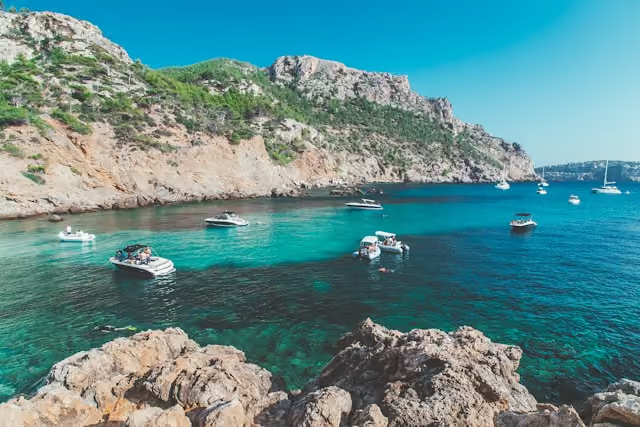
Complete Tap Water Safety Guide for Mallorca
Tap water in Mallorca is safe to drink according to EU drinking water regulations, and the Balearic Islands water authority monitors quality consistently. However, Mallorca's water has a reputation for being hard and heavily mineralised, which gives it a noticeably unpleasant taste in many parts of the island. Unlike the mainland, Mallorca relies primarily on groundwater from underground aquifers that have been depleted and stressed by decades of mass tourism and agricultural demand. This overuse has led to saltwater intrusion in some coastal aquifers, contributing to the high mineral and chloride content that makes tap water in Palma and resort areas taste particularly poor.
The island also supplements its groundwater supply with desalination, particularly during the summer months when tourist numbers swell to several times the resident population. Desalinated water shares the same flat, mineral taste characteristic seen across the Canary Islands. In some inland areas and smaller municipalities, the water may come from higher-quality aquifer sources and taste better, but there is no reliable way for visitors to predict this without local knowledge.
As with the Canary Islands, the local Mallorcan population rarely drinks tap water at home. Bottled water is a staple purchase in every supermarket, and households typically use large refillable containers for day-to-day drinking and cooking. Hotels almost universally provide bottled water in rooms and serve filtered water at their bars and restaurants. This cultural norm exists despite the water being technically safe — taste is the primary driver.
From a health perspective, there are no risks associated with drinking Mallorcan tap water. It is safe for brushing teeth, cooking, making coffee and tea, and all general household uses. The water quality meets the standards required under the EU Drinking Water Directive, which sets strict limits on microbiological and chemical contamination. Visitors occasionally notice stomach sensitivity when first arriving, but this is typically related to a change in mineral composition rather than contamination.
For visitors who want to reduce plastic waste during their stay, a reusable bottle with a built-in filter or a filter jug purchased locally is a practical and affordable option. Mallorca has been taking steps to promote sustainable tourism and reduce plastic consumption, and several municipalities have improved their drinking water infrastructure in recent years. Palma's tap water, while still not particularly pleasant to drink plain, has improved in quality compared to previous decades.
Bottled Water Information
Bottled water is cheap and available everywhere in Mallorca. Large 5–8 litre bottles cost €1–2 at supermarkets including Mercadona, Lidl, Aldi, and Eroski. Standard 1.5 litre bottles are €0.30–0.60 at supermarkets and €1–2 at restaurants, beach bars, and hotel shops. Picking up a large bottle on arrival at a supermarket is the most economical approach for self-catering visitors.
Is ice safe in Mallorca?
Ice is safe throughout Mallorca. Hotels, restaurants, and bars use treated municipal water that meets EU drinking water standards. Visitors can consume ice anywhere on the island without concern.
Should you use a water filter in Mallorca?
A water filter is a practical investment in Mallorca, especially for longer stays. Filters designed to reduce hardness, chlorine, and minerals can significantly improve the taste of tap water. A filter jug or reusable bottle with a built-in filter also helps reduce single-use plastic consumption, which aligns with Mallorca's growing focus on sustainable tourism.
Should you boil tap water in Mallorca?
Boiling tap water is not required in Mallorca. The water meets EU safety standards and is free from harmful pathogens. Boiling will not improve the hard, mineral taste that leads most people to prefer bottled water.
Questions!
Is tap water safe to drink in Mallorca?
Yes, it meets EU drinking water standards and is free from harmful contamination. However, the water is very hard and mineral-heavy in most parts of the island, making it unpleasant to drink straight from the tap. Most locals and visitors use bottled water.
Why does tap water taste bad in Mallorca?
Mallorca relies heavily on groundwater from overused aquifers that have suffered saltwater intrusion due to decades of over-extraction. This results in high mineral and chloride content, giving tap water a hard, unpleasant taste in most areas.
Is tap water safe to brush teeth with in Mallorca?
Yes. Tap water in Mallorca is perfectly safe for brushing teeth and all incidental uses. The taste issue is not a health concern.
Is ice safe in Mallorca?
Yes. Ice served at hotels, restaurants, and bars across Mallorca is produced from treated water meeting EU standards. It is completely safe for visitors to consume.
Is the tap water in Palma safe to drink?
It meets EU safety standards, but like the rest of Mallorca, Palma tap water is known for its hard, mineralised taste due to the local aquifer supply. Most Palma residents drink bottled water, though the quality has improved in recent years and some visitors drink it without issue.
We don't conduct independent water testing. We summarise and interpret publicly available official data. Conditions can change rapidly — always verify with local authorities before travelling.
Explore more destinationsSpain
📚 Official Resources & Further Reading
Government of the Balearic Islands – Water Management
Spanish Ministry for Ecological Transition – Water Supply
European Commission – Drinking Water Directive
WHO – Water Sanitation and Health
NSF International – Water Filter Guide

.svg)
