


Can You Drink Tap Water in Mexico City?
Complete Drinking Water Safety Information for Mexico City
Tap water in Mexico City is not safe to drink and this applies throughout the entire metropolitan area — Centro Histórico, Roma Norte and Sur, Condesa, Polanco, Coyoacán, Xochimilco, Santa Fe, and the outer boroughs. Water supply is managed by SACMEX (Sistema de Aguas de la Ciudad de México), which draws from two primary sources: the Cutzamala System — a vast infrastructure of reservoirs and pumping stations in the State of Mexico and Michoacan that transports water up more than 1,000 metres of altitude to supply the city — and the Valley of Mexico aquifer system beneath the city. The aquifer, which once underlay the ancient Aztec city of Tenochtitlan and the shallow lakebed on which Mexico City is built, has been severely over-extracted for centuries, causing the city to sink at an extraordinary rate — some areas have subsided by more than 10 metres in the past century — and introducing seismic stress into the pipe infrastructure as the ground moves beneath it.
The infrastructure consequences of subsidence are significant for water quality. Mexico City’s pipe network is subject to constant stress, cracking, and movement from the sinking ground beneath it, producing a distribution system with exceptionally high leak rates — SACMEX estimates that approximately 40% of treated water is lost to pipe leaks before reaching any consumer. These same cracks and joints that leak water out also allow external contamination in, introducing bacterial regrowth, soil contamination, and sediment between the treatment plant and the tap. This structural vulnerability, combined with the age of pipe infrastructure in the city’s historic colonias, makes Mexico City tap water unsafe for consumption regardless of the treatment quality at source.
The piped supply is also intermittent throughout much of the city — Mexico City operates on a complex water rationing system called the tandeo, under which different neighbourhoods receive piped water on different days of the week. When supply is off, buildings rely on rooftop tinaco tanks and basement cisterns that store water between delivery days. These storage systems, particularly in older buildings in Centro Histórico, Tepito, Doctores, and the outer boroughs, introduce further quality degradation. The combination of cracked pipes, storage tanks, and ground subsidence makes Mexico City one of the more challenging tap water situations among major world cities.
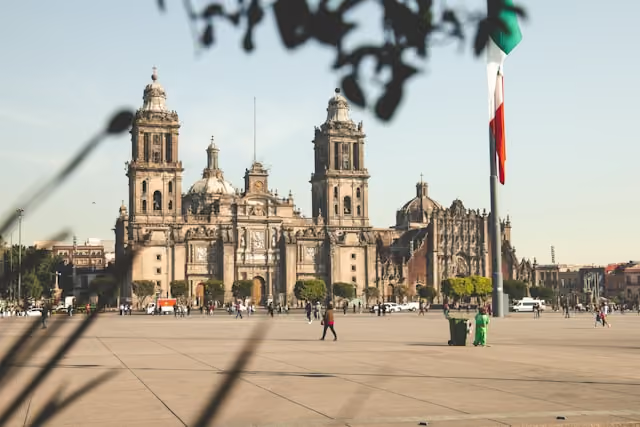
For visitors staying in Mexico City’s most visited areas — the Zocalo and Centro Histórico with the Metropolitan Cathedral and Templo Mayor, the bohemian colonias of Roma Norte and Condesa, the upscale Polanco district and its Chapultepec Park adjacency, the Coyoacán neighbourhood with the Frida Kahlo Museum and Leon Trotsky House, and the Xochimilco floating gardens — sealed bottled water is the universal hydration source. Bonafont, Ciel, and E-Pura are available at OXXO stores within metres of every tourist attraction in the city.
Mexico City’s restaurant scene is one of the world’s finest, with remarkable street food in the taquerias of Roma and Condesa, upscale tasting menus in Polanco, and a century’s worth of established fondas throughout the historic centre. All established restaurants — from the taco al pastor stand on Paseo de la Reforma to Michelin-recognised restaurants in the Santa Fe and Polanco zones — use purified water for cooking and ice production. Ice at established venues throughout the city is safe. Requesting agua de llave (tap water) at any Mexico City restaurant will be declined or result in bottled water being served — not because of restaurant policy but because no one in Mexico City drinks from the tap.
Bottled Water Information
Bottled water is universally available throughout Mexico City at every OXXO, 7-Eleven, Chedraui, and Soriana across the city. Bonafont, Ciel, and E-Pura are the most widely available brands, all produced to Mexican NOM-041 drinking water standards. A 1.5-litre bottle costs approximately MXN 15–35 at convenience stores throughout Roma Norte, Condesa, Polanco, Centro Histórico, and Coyoacán. The 20-litre garrafón jug delivery system is the standard drinking water solution for Mexico City households and offices and is the most economical option for apartment or longer stays.
Is Ice Safe in Mexico City?
Ice safety in Mexico City requires consistent awareness. At established restaurants in Roma Norte, Condesa, Polanco, and hotel venues throughout the city, ice is produced from purified water and is safe. Mexico City’s commercial ice supply — used at most taquerias and mid-level restaurants — is of good quality and generally safe. At very informal street stalls and market vendors, ice quality is less certain. The practical rule: established venues and reputable taquerias — generally safe; very informal street stalls — request sin hielo (without ice) if uncertain.
Should You Use a Water Filter in Mexico City?
A water filter is a practical option for longer stays in Mexico City, particularly for visitors in apartment rentals in Roma, Condesa, or Coyoacán where daily bottled water purchases accumulate. Reverse osmosis countertop systems are widely used by Mexico City’s large expatriate and digital nomad community and are available from Liverpool, Home Depot Mexico, and online throughout the city. For short-stay visitors, bottled water is the most convenient solution. The 20-litre garrafón delivery system is the most economical solution for apartment stays of any length in any Mexico City neighbourhood.
Should You Boil Tap Water in Mexico City?
Boiling Mexico City tap water kills biological contaminants but does not address the heavy metal contamination — including lead from aging pipes in older colonia buildings — that is a particular concern in the city’s historic districts. Bottled water is universally available throughout Mexico City at very low cost and is the recommended solution for all visitors.
Questions!
Is tap water safe to drink in Mexico City?
No. Tap water in Mexico City is not safe to drink. SACMEX treats water from the Cutzamala System and Valley of Mexico aquifer, but a pipe network under constant stress from city-wide subsidence, 40% leak rates, and rooftop tinaco storage tanks make the water unsafe at the point of consumption. No Mexico City resident or visitor drinks directly from the tap. Use sealed bottled water throughout your stay.
Why is Mexico City’s infrastructure so challenging for water quality?
Mexico City is built on a former lakebed and has been sinking — in some areas by over 10 metres in the past century — as its underlying aquifer is over-extracted. This subsidence continuously cracks and stresses the pipe network, causing 40% of treated water to leak out and allowing external contamination in. It is one of the most structurally unique urban water challenges in the world.
Is ice safe in Mexico City restaurants and street food stalls?
At established restaurants in Roma, Condesa, and Polanco, and at all hotel venues, ice is produced from purified water and is safe. At taquerias and street food stalls, ice is generally commercially produced and safe — Mexico City’s commercial ice supply is of good quality. At very informal stalls, request sin hielo if you cannot confirm the ice source.
What is the best bottled water brand in Mexico City?
Bonafont is Mexico’s most widely available and trusted still water brand. Ciel (Coca-Cola Mexico) and E-Pura are also reliable. A 1.5-litre bottle costs MXN 15–35 at every OXXO and convenience store throughout the city. For longer stays, the 20-litre garrafón delivery system is the most economical solution.
Is water safe at Mexico City’s markets and food stalls?
The food at Mexico City’s established markets — Mercado de la Merced, Mercado Medellín, and Coyoacán’s Mercado de Antojitos — uses purified water for cooking and is generally safe. Do not drink from any water tap or fountain at any market. Carry your own sealed bottled water to all market and street food excursions.
We don't conduct independent water testing. We summarise and interpret publicly available official data. Conditions can change rapidly — always verify with local authorities before travelling.
Explore more destinationsMexico
📚 Official Resources & Further Reading
World Health Organization (WHO) – Drinking Water Safety Guidelines
Centers for Disease Control and Prevention (CDC) – Mexico Travel Health Advice
Australian Government – Smartraveller Mexico

.svg)
