

Can You Drink Tap Water in Sri Lanka?
Tap water in Sri Lanka is not safe to drink. Bottled or filtered water is recommended for all travelers throughout the country.
Complete Drinking Water Safety Information for Sri Lanka
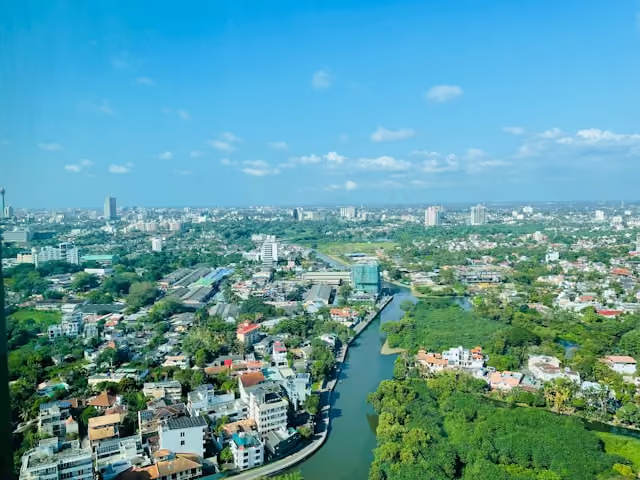
Tap water in Sri Lanka is not safe to drink and should be avoided throughout the country, including in the capital Colombo. The National Water Supply and Drainage Board (NWSDB) operates water treatment facilities across Sri Lanka, and treated water in Colombo and major cities generally meets basic treatment standards at source. However, contamination occurs during distribution through aging pipes, intermittent supply, and rooftop storage tanks that are inconsistently maintained. The combination of tropical climate and infrastructure limitations means bacterial contamination of tap water is common even in urban areas.
In Colombo, most residents — including those in middle and upper-income households — use household water filters or purchase bottled and dispensed water rather than drinking directly from the tap. Expats and international visitors universally avoid tap water. Hotels catering to international visitors provide bottled water as standard. In popular tourist destinations including Galle, Kandy, Sigiriya, Nuwara Eliya, and Ella, the situation is similar — tap water should not be consumed and bottled water is universally available.
Beach resort areas including Mirissa, Unawatuna, Arugam Bay, and Trincomalee have varying water infrastructure depending on the specific location. In established resort areas, hotels typically have filtration systems and provide safe drinking water. In more remote coastal areas and small guesthouses, water quality is less reliable and bottled water is essential.
In rural Sri Lanka, including the dry zone in the north and east and highland areas in the centre, water infrastructure is more limited. Some rural communities rely on wells, tanks (traditional reservoirs), and boreholes of variable quality. Additionally, chronic kidney disease of unknown aetiology (CKDu) has been identified in agricultural communities in Sri Lanka's dry zone, and while the exact cause is debated, contaminated groundwater is considered a contributing factor. Travelers in rural dry zone areas should be particularly cautious about water sources.
Bottled Water information in Sri Lanka

Bottled water is widely available throughout Sri Lanka at supermarkets, convenience stores, hotels, restaurants, and roadside shops. Prices are affordable, typically LKR 80–200 (approximately USD $0.25–$0.60) per 1.5-litre bottle. Popular brands include Elephant House, Nestlé Pure Life, and Kelani Valley. Larger 5 and 10-litre bottles are available at supermarkets for longer stays.
In tourist areas including Colombo, Galle, Kandy, and the beach resorts, bottled water is readily available and inexpensive. In remote areas, rural villages, and lesser-visited destinations, availability may be more limited. Stock up on bottled water before heading to remote wildlife parks, highland areas, or off-the-beaten-path destinations where resupply may not be guaranteed.
Is ice safe in Sri Lanka?
Ice safety in Sri Lanka varies by establishment. In upscale hotels, international restaurants, and tourist-oriented venues in Colombo and major resort areas, ice is typically made from filtered or purified water and is generally safe. In local restaurants, street food stalls, and small eateries, ice is frequently made from tap water and should be avoided.
A useful general rule throughout Sri Lanka: request drinks without ice at local establishments and street food stalls, and opt for chilled bottled or canned drinks instead. In beach towns and tourist areas, established restaurants and bars catering to international visitors typically use filtered ice and this is less of a concern.
Can you use a water filter in Sri Lanka?
Water filters are widely used by Sri Lankan households and are a practical solution for longer stays. Countertop and under-sink filtration systems are available in hardware stores in Colombo and major cities. For visitors, portable filters provide useful backup particularly in rural areas or during extended travel outside main tourist centres.
A hollow fibre filter capable of removing bacteria and protozoa is suitable for most situations in Sri Lanka. For comprehensive protection including viruses, a filter combined with UV treatment or chemical purification is advisable. In the dry zone rural areas where groundwater quality is a particular concern, a multi-stage filter including activated carbon is recommended.
Should you boil tap water in Sri Lanka?
Yes, boiling is recommended if tap water is your only option. A rolling boil for at least one minute kills bacteria, viruses, and protozoa present in Sri Lankan tap water. Many Sri Lankan households boil drinking water as a standard practice, and this is a reliable method when bottled water is not available.
In practice, bottled water is cheap and widely available throughout Sri Lanka, making boiling largely unnecessary for most travelers. For those staying in rural areas or doing extended travel away from main tourist routes, having water purification tablets as backup is a sensible precaution.
Questions!
Can you drink tap water in Colombo?
No. Tap water in Colombo is treated but not recommended for drinking due to aging distribution pipes, intermittent supply, and storage tank contamination. Most residents use filtered or bottled water. All visitors should do the same.
Is tap water safe in Sri Lanka's beach resorts like Mirissa and Unawatuna?
No. Established beach resort hotels typically have filtration systems and provide safe drinking water to guests, but tap water from rooms should not be consumed directly. Bottled water is widely available throughout all beach resort areas.
Is water safe near Sigiriya, Kandy, and the Cultural Triangle?
No. Tap water is not safe to drink throughout Sri Lanka including the Cultural Triangle, hill country, and national park areas. Bottled water is available at all main tourist sites and hotels in these areas.
Is there a special water concern in Sri Lanka's dry zone?
Yes. Chronic kidney disease of unknown aetiology (CKDu) has been linked to contaminated groundwater in agricultural communities in Sri Lanka's dry zone (north-central province). While the cause is still debated, travelers in these areas should be especially careful to drink only bottled or well-filtered water.
What are the waterborne disease risks in Sri Lanka?
Typhoid, hepatitis A, traveler's diarrhea, and cholera are documented risks from contaminated water in Sri Lanka. Leptospirosis is also a risk in flood-affected areas. Drinking only bottled or properly filtered water and practicing good food hygiene throughout your visit significantly reduces your risk.
We don't conduct independent water testing. We summarises and interpret publicly available official data. Conditions can change rapidly — always verify with local authorities before travelling.
Explore all popular destinations inSri Lanka
Explore more countries in Asia
Comprehensive tap water safety information for countries across Asia, including Southeast Asia, East Asia, South Asia, and Central Asia.




📚 Official Resources & Further Reading

.svg)
