

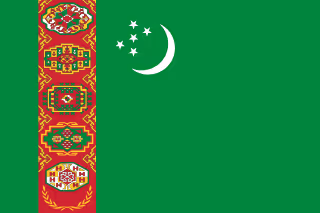
Can You Drink Tap Water in Turkmenistan?
Tap water in Turkmenistan is not safe to drink. The country is also one of the world's most restricted destinations with extremely limited independent travel.
Complete Drinking Water Safety Information for Turkmenistan
Tap water in Turkmenistan is not safe to drink. Water infrastructure throughout the country is severely limited despite the nation's significant natural gas wealth, which has not been equitably invested in public services. In the capital Ashgabat — a surreal marble city of grandiose monuments and empty boulevards — tap water is treated but contamination through aging distribution pipes and intermittent supply is a documented concern. Most residents and the small number of international visitors rely on bottled water.
Outside Ashgabat, water infrastructure is significantly more limited. In smaller cities including Mary and Turkmenabat, water quality is unreliable and bottled water is the only safe option. In rural and desert areas — much of Turkmenistan is covered by the Karakum Desert, one of the world's largest sand deserts — water infrastructure is minimal to non-existent. Communities and travelers in these areas must rely on bottled water or treated water from local sources.
It is important to note that Turkmenistan is one of the most closed and restricted countries in the world — second only to North Korea in terms of travel restrictions. Independent tourism is effectively impossible; foreign visitors require a visa (which is difficult to obtain and typically issued for organised tour groups only) and a government-assigned guide who accompanies them throughout their visit. The number of international visitors to Turkmenistan is extremely small, and those who do visit are typically hosted by tour operators who manage water supply as part of the tour package.
The Darvaza Gas Crater — the famous “Door to Hell” burning in the Karakum Desert — attracts the majority of Turkmenistan's limited visitors. Access to this remote site involves desert travel where water supply is managed entirely by tour operators. Bottled water carried by the tour group is the only drinking water option.
Bottled Water information in Turkmenistan

Bottled water is available in Ashgabat at supermarkets and hotels. Outside the capital, availability is more limited. For organised tours — the only realistic way to visit Turkmenistan — bottled water is provided by the tour operator as part of the package throughout the itinerary. Visitors should not need to independently source bottled water but it is wise to carry a personal supply as backup, particularly for remote desert excursions to the Darvaza Gas Crater and other off-road destinations.
Is ice safe in Turkmenistan?
Ice safety information for Turkmenistan is extremely limited given the tiny number of visitors and the controlled nature of organised tours. In upscale hotels in Ashgabat, ice is likely produced from filtered water and reasonably safe in that specific setting. Outside Ashgabat and at any local establishment, ice should be avoided. For desert excursions including visits to the Darvaza Gas Crater, cold drinks are managed by tour operators and ice is rarely a consideration.
Can you use a water filter in Turkmenistan?
A portable water filter is a sensible precaution to carry to Turkmenistan, particularly for desert excursions where water availability is limited and entirely dependent on what the tour operator provides. However, given the highly organised nature of tourism in Turkmenistan, most visitors will not need to independently treat water during their visit. A UV purifier and purification tablets as a lightweight emergency backup are recommended.
Should you boil tap water in Turkmenistan?
Yes, boiling is essential if tap water is your only option. A rolling boil for at least one minute kills biological pathogens in Turkmenistan's tap and surface water. In practice, visitors on organised tours are provided with bottled water throughout their itinerary and would not typically need to boil tap water. Carry purification tablets as an emergency backup for any situation where bottled water supply is exhausted.
Popular destinations inTurkmenistan
Questions!
Can you visit Turkmenistan independently?
Effectively no. Turkmenistan is one of the world's most restricted countries. Foreign visitors require a difficult-to-obtain visa and a government-assigned guide accompanying them throughout. Independent tourism is not permitted. Most visitors travel on organised group tours through specialist Central Asia operators.
Can you drink tap water in Ashgabat?
No. Tap water in Ashgabat is not safe to drink. Organised tour groups are provided with bottled water by their operators throughout the itinerary. Visitors should not drink from bathroom taps under any circumstances.
Is water available at the Darvaza Gas Crater?
Water at the Darvaza Gas Crater — the famous burning desert crater in the Karakum — is entirely dependent on what your tour operator provides. There is no independent water source or supply point at this remote desert location. Your tour operator manages all water logistics for the excursion.
Is Turkmenistan similar to North Korea in terms of travel restrictions?
Yes, Turkmenistan is often cited alongside North Korea as one of the world's most closed countries. The government tightly controls all aspects of tourism, information, and movement within the country. Visitor numbers are extremely small and all visits are highly controlled.
What should I carry for water safety in Turkmenistan?
For most visitors on organised tours, relying on tour-operator-provided bottled water is sufficient. As personal backup, carry purification tablets and a compact UV purifier for any situation where supplied water runs out, particularly on remote desert excursions.
We don't conduct independent water testing. We summarises and interpret publicly available official data. Conditions can change rapidly — always verify with local authorities before travelling.
Explore all popular destinations inTurkmenistan
Explore more countries in Asia
Comprehensive tap water safety information for countries across Asia, including Southeast Asia, East Asia, South Asia, and Central Asia.






📚 Official Resources & Further Reading

.svg)
