

Can You Drink the Tap Water in Honolulu?
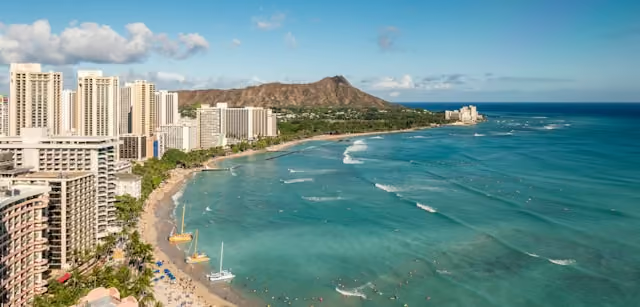
Complete Drinking Water Safety Information for Honolulu
Honolulu's tap water is supplied by the Honolulu Board of Water Supply (BWS) and is sourced from O'ahu's volcanic aquifer system — one of the most significant freshwater resources in the Pacific. Rainwater percolates through the porous basaltic rock of the Ko'olau and Wai'anae mountain ranges, collecting in a vast underground lens of freshwater that sits above denser saltwater. This naturally filtered volcanic aquifer water is of excellent quality and requires minimal treatment. The water meets and exceeds US EPA Safe Drinking Water Act standards throughout the Honolulu distribution network.
Honolulu's tourist districts — Waikiki, downtown Honolulu, Kaimuki, Kaka'ako, and the broader Oahu metropolitan area — are all served by the same high-quality municipal supply. Hotels throughout Waikiki, from budget properties to luxury resorts on Kalakaua Avenue, are connected to the same safe municipal water. The water has a clean, slightly sweet character that reflects its volcanic aquifer origin. Visitors can drink tap water with complete confidence throughout Honolulu and the wider Oahu area.
Hawaii is a US state and Honolulu's water infrastructure is regulated to the same federal EPA standards as any mainland US city. The Honolulu Board of Water Supply publishes annual water quality reports confirming compliance across all parameters. Water quality in Honolulu is consistently excellent and the BWS is regarded as one of the better-managed water utilities in the United States, with significant investment in aquifer protection and sustainable water management given Hawaii's geographic isolation and the irreplaceable value of its groundwater resources.
Beyond Waikiki and central Honolulu, tap water is safe throughout O'ahu including the North Shore, Kailua, Kane'ohe, Pearl City, and Ewa Beach. For day trips to the Polynesian Cultural Center, Hanauma Bay, or the North Shore surf beaches, tap water from any facility is safe. In more remote hiking areas such as the Ko'olau trails, carry water from a tap rather than consuming untreated natural stream water, which can carry leptospirosis from animal contamination in Hawaii's warm, wet environment.
Bottled water is widely available throughout Honolulu but is not necessary from a safety or quality standpoint. Honolulu's volcanic aquifer water is of excellent quality. A reusable water bottle is the most practical and environmentally responsible approach for visitors — particularly given Hawaii's strong environmental ethos and ongoing efforts to reduce single-use plastic waste across the islands.
Bottled Water Information
Bottled water is widely available throughout Honolulu at supermarkets including Safeway, Times, and Costco, convenience stores, and hotel shops. National US brands including Dasani, Aquafina, and FIJI Water are widely available. Hawaiian spring water brand Waiola and locally sourced artisan waters are also available at specialty stores. Prices are similar to mainland US. Given Honolulu's warm climate and outdoor activities, staying well hydrated is important — a reusable bottle filled from the tap is the most economical and environmentally sound approach.
Is ice safe in Honolulu?
Ice is completely safe throughout Honolulu's restaurants, bars, hotels, and beach venues. The city's water supply meets US EPA drinking water standards and ice throughout Waikiki and the broader Honolulu area is produced from the same safe, high-quality municipal supply. There are no concerns about ice safety for visitors anywhere in Honolulu.
Can you use a water filter in Honolulu?
Water filters are not necessary in Honolulu. The tap water is of excellent quality and meets US EPA standards without any filtration. Some residents use filters as a personal taste preference. For visitors, tap water is perfectly safe and enjoyable to drink without any treatment.
Should you boil tap water in Honolulu?
Boiling tap water is not necessary in Honolulu. The water meets US EPA Safe Drinking Water Act standards and is completely safe to drink directly from the tap. No treatment is required under normal conditions.
Questions!
Can you drink tap water in Honolulu?
Yes. Honolulu tap water is safe to drink and of excellent quality, sourced from O'ahu's volcanic aquifer system and regulated to US EPA standards. Visitors can drink freely from the tap throughout Waikiki, downtown Honolulu, and all of O'ahu.
Where does Honolulu's water come from?
Honolulu's water is sourced from O'ahu's volcanic aquifer — a vast underground lens of freshwater that forms as rainwater percolates through the porous basaltic rock of the Ko'olau and Wai'anae mountain ranges. This naturally filtered groundwater is of excellent quality and requires minimal treatment before distribution.
Is tap water safe in Waikiki hotels?
Yes. All hotels throughout Waikiki are connected to Honolulu's municipal water supply, which meets US EPA standards. Tap water in hotel rooms is safe for drinking, brushing teeth, and all other uses. Many hotels also provide filtered water stations as a convenience.
Is it safe to drink from natural streams and waterfalls on O'ahu hiking trails?
No. Natural streams and waterfalls in Hawaii should not be consumed untreated. Hawaii's warm, wet environment supports leptospirosis bacteria, which are spread through animal urine into waterways and can cause serious illness. Always carry treated tap water on O'ahu hikes rather than drinking from natural sources.
Is ice safe in Honolulu restaurants and bars?
Yes. Ice in Honolulu restaurants, bars, and hotels is completely safe. The municipal water supply meets US EPA standards and ice throughout the city is produced from the same safe treated supply.
We don't conduct independent water testing. We summarise and interpret publicly available official data. Conditions can change rapidly — always verify with local authorities before travelling.
Explore more destinationsUnited States
📚 Official Resources & Further Reading

.svg)
