

Can You Drink Tap Water in Athens?
Complete Drinking Water Safety Information for Athens
Athens tap water is safe to drink and meets EU Drinking Water Directive standards throughout the city. Water supply is managed by EYDAP (Athens Water Supply and Sewerage Company — Eυδαπ), which draws from three primary sources: the Mornos reservoir in central Greece (the largest, connected to Athens via a 192-kilometre pipeline), the Marathon reservoir in the foothills northeast of Athens (the oldest, constructed during the 1920s and still in active use), and Lake Yliki in Boeotia. Water from all three sources undergoes treatment at EYDAP's facilities including coagulation, sedimentation, filtration, and chlorination before distribution through Athens' metropolitan network. The water consistently meets and often exceeds EU Drinking Water Directive parameters at the point of treatment.
Despite being safe, Athens tap water has a reputation among residents for a noticeable chlorine taste — a consequence of the chlorination levels applied across a large and complex distribution network serving approximately 4 million people across the Greater Athens metropolitan area. The chlorine treatment is necessary and effective, but the detectable chemical note it leaves is the primary reason why many Athenians — particularly in older central neighbourhoods — default to bottled water for daily consumption. In newer districts with more recently installed pipe infrastructure, the taste is generally milder. The water is safe throughout; the taste is the only practical consideration.
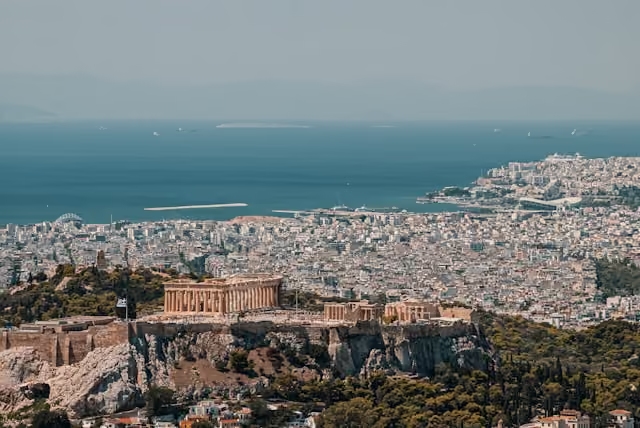
Visitors staying in central Athens — in the tourist-dense areas around the Acropolis, Monastiráki, Plaka, Syntagma, and Psyrri — will find safe tap water at all hotels, guesthouses, and restaurants. The Kolonaki, Pangrati, Exarchia, and Koukaki neighbourhoods, popular with longer-stay visitors and Airbnb guests, all draw from the same EYDAP network. The historic Plaka neighbourhood, directly beneath the Acropolis, has an older pipe network but the water remains safe to drink. Athens restaurants typically present bottled water as the default table option, but requesting nero apo ti vrysi (νερό από τη βρύση — tap water) is legally your right and increasingly accepted in casual dining venues throughout the city.
Athens experiences a hot, dry Mediterranean climate with peak summer temperatures regularly exceeding 38°C in July and August — among the highest of any European capital city. Adequate hydration is critically important during summer visits, and the combination of heat, extensive sightseeing on exposed archaeological sites such as the Acropolis, the Ancient Agora, and the Temple of Olympian Zeus, and the city's hilly terrain means water consumption needs are significantly higher than in cooler European cities. Whether using tap water, filtered water, or bottled water, maintaining hydration throughout any Athens summer visit is a genuine health priority.
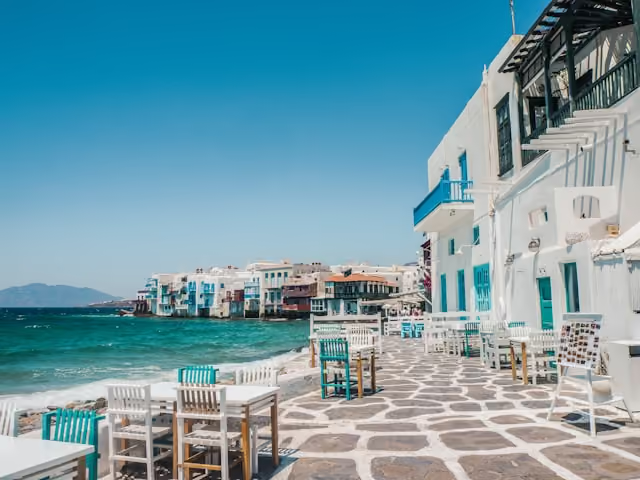
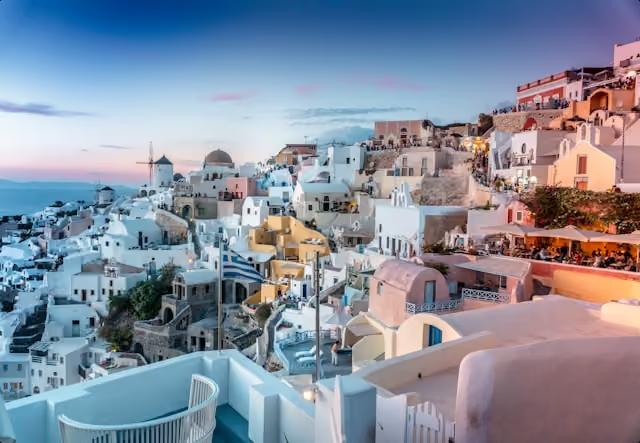
For day trips from Athens to the Attica region — to Cape Sounion and the Temple of Poseidon, the archaeological sites of Delphi, Olympia, or Mycenae, or ferry departures to the Saronic Gulf islands of Aegina, Hydra, and Poros — tap water safety varies by location. On the Greek mainland, tap water quality is generally consistent with Athens' standard. On nearby islands, the same desalination and water quality concerns that affect Mykonos and Santorini apply. Always carry bottled water when travelling to smaller islands from Athens' Piraeus port.
Bottled Water Information
Bottled water is extremely widely available throughout Athens given the strong local preference for taste over tap water. Zagori, sourced from natural springs in the Zagori region of Epirus in northwestern Greece, is the country's most widely available and trusted still mineral water brand. Loutraki, from the Corinthian spring town of the same name, is the leading Greek sparkling mineral water. Avra and Epsa are also commonly available still brands. A 1.5-litre bottle costs approximately €0.50–€1.20 at AB Vassilopoulos, Sklavenitis, Lidl, and My Market supermarkets throughout the city, rising at tourist-area cafés and restaurants near the Acropolis, Monastiráki, and Syntagma Square. Large-format bottles for apartment or Airbnb stays are economically priced at all major supermarkets.
Is Ice Safe in Athens?
Ice in Athens is completely safe at all establishments. EYDAP's supply meets EU Drinking Water Directive standards and is free from biological contamination throughout the city. Ice at rooftop bars overlooking the Acropolis in Monastiráki, seafood restaurants in Mikrolimano, hotel bars in Syntagma, and cafés in Kolonaki and Koukaki is completely safe. Ice quality is not a consideration for any visitor anywhere in Athens.
Should You Use a Water Filter in Athens?
A water filter is not necessary for safety in Athens but is a practical taste improvement for longer stays. An activated carbon filter — a Brita jug or similar — effectively reduces the mild chlorine note in Athens' tap water, producing a more neutral, palatable result. For short-stay visitors, bottled water is more convenient. For stays of a week or more in an Airbnb or apartment in Koukaki, Pangrati, or Exarchia, a filter jug available from supermarkets throughout the city makes daily tap water more pleasant and significantly reduces plastic bottle waste.
Should You Boil Tap Water in Athens?
Boiling Athens tap water is entirely unnecessary. EYDAP's supply meets EU Drinking Water Directive standards with no biological safety concerns and the distribution network across the city is regularly maintained and monitored. The water is safe directly from any tap throughout Athens — boiling adds no safety value and does not address the mild chlorine taste that is the only practical consideration for visitors.
Questions!
Is tap water safe to drink in Athens?
Yes. Athens tap water is managed by EYDAP and sourced from the Mornos reservoir, Marathon reservoir, and Lake Yliki. It meets EU Drinking Water Directive standards and is safe to drink from any tap throughout the city. Many Athenians prefer bottled water for taste reasons — a mild chlorine note from treatment — but the water is completely safe.
Why do many Athenians not drink tap water?
Athens' tap water has a detectable chlorine taste resulting from the chlorination levels required to treat and distribute water across a metropolitan network of 4 million people. This taste — not any safety concern — is the reason many residents default to bottled water. The water is safe; the taste is the only practical issue.
Is ice safe in Athens restaurants and cafés?
Yes. EYDAP's supply is free from biological contamination and meets EU safety standards throughout the city. Ice at every café near the Acropolis, taverna in Monastiráki, rooftop bar in Kolonaki, and hotel in Syntagma is completely safe. Ice quality is not a concern anywhere in Athens.
What is the best bottled water brand in Athens?
Zagori, from natural springs in Epirus, is Greece's most trusted still mineral water brand. Loutraki is the leading sparkling option. Both are available at AB Vassilopoulos, Sklavenitis, and Lidl supermarkets for approximately €0.50–€1.20 per 1.5-litre bottle. Neither is necessary for safety — the tap water is completely safe.
Do I need a water filter in Athens?
Not for safety. Athens tap water is safe to drink without filtration. An activated carbon filter reduces the mild chlorine taste if desired, but this is purely an aesthetic choice. For short stays, bottled water is more practical; for longer stays, a basic filter jug is a worthwhile investment.
We don't conduct independent water testing. We summarise and interpret publicly available official data. Conditions can change rapidly — always verify with local authorities before travelling.
Explore more destinationsGreece
📚 Official Resources & Further Reading
World Health Organization (WHO) – Drinking Water Safety Guidelines
Centers for Disease Control and Prevention (CDC) – Greece Travel Health Advice
Australian Government – Smartraveller Greece

.svg)
