

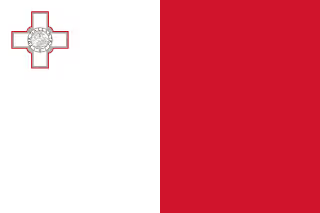
Can You Drink Tap Water in Malta?
Tap water in Malta is safe to drink and meets EU standards, but the strong taste from desalination means most residents and visitors prefer bottled water.
Complete Drinking Water Safety Information for Malta
Tap water in Malta is technically safe to drink and complies with EU drinking water standards — Malta has been an EU member since 2004. However, the overwhelming majority of Maltese residents and visitors choose bottled water because Malta's tap water has a very distinctive, sometimes unpleasant taste resulting from its near-total reliance on seawater desalination. Malta is one of the most water-stressed countries in Europe, with no rivers, very limited groundwater, and among the lowest annual rainfall in the EU.
Malta produces approximately 60% of its drinking water through reverse osmosis desalination at plants operated by the Water Services Corporation (WSC). The remainder comes from groundwater extracted from the islands' limestone aquifer. The desalination process produces water that is technically safe but has a flat, sometimes slightly salty or mineralised taste that most people find significantly different from mainland European tap water. Additionally, Malta's water distribution network has sections of aging infrastructure that can affect taste further.
In Valletta — Malta's UNESCO-listed capital and a major cruise and cultural tourism destination — tap water is safe but bottled water is the near-universal choice. In St Julian's, Sliema, Mdina, Gozo, and across Malta's major tourist areas, the same applies. Hotels throughout Malta provide bottled water as standard. Many Maltese households use reverse osmosis filtration systems fitted under the kitchen sink to improve tap water taste.
Malta's small size — it is one of the smallest and most densely populated countries in the world — means the water infrastructure issues affect the entire island fairly uniformly. Gozo, the smaller sister island, has a similar water supply situation to the main island.
Bottled Water information in Malta

Bottled water is universally available throughout Malta and Gozo at supermarkets, convenience stores, kiosks, and restaurants. Most Maltese households buy bottled water for drinking. Prices are reasonable at €0.40–1.20 per 1.5-litre bottle. Both local Maltese brands and imported Italian and European brands are available. Large 6 and 8-litre bottles are available at supermarkets such as LIDL and MCAST outlets for apartment stays. For visitors spending extended time in Malta, buying in bulk from a supermarket is the most economical option.
Is ice safe in Malta?
Ice is safe throughout Malta in hotels, restaurants, and bars. Ice is produced from the treated municipal supply which meets EU safety standards. There are no health concerns about ice consumption anywhere in Malta's tourist venues and restaurants.
Can you use a water filter in Malta?
Water filters are extremely popular in Malta and are used by a very high proportion of households. Under-sink reverse osmosis systems are the most common choice and significantly improve both the taste and quality of Maltese tap water by removing the distinctive desalination taste and any residual minerals. For visitors on short stays, bottled water is more practical. For longer stays or expats, a reverse osmosis system is a worthwhile investment.
Should you boil tap water in Malta?
Boiling is not necessary in Malta from a safety perspective — the water meets EU drinking water standards. The widespread preference for bottled water in Malta is driven entirely by taste, not safety. If you choose to drink tap water, it is safe without boiling or treatment.
Popular destinations inMalta
Questions!
Can you drink tap water in Malta?
Technically yes — Malta's tap water meets EU safety standards. However, almost everyone uses bottled water because the desalinated water has a strong, flat taste that most people find unpleasant. Bottled water is inexpensive and available everywhere.
Why does Maltese tap water taste so different?
Malta relies heavily on seawater desalination — around 60% of its water supply — because the island has no rivers and very limited rainfall. Desalinated water is safe but has a distinctive taste that most people find less pleasant than spring or groundwater. Malta's groundwater is also naturally high in minerals, adding to the taste.
Is tap water safe in Gozo?
Yes. Gozo's water supply comes from the same Water Services Corporation infrastructure as the main island and meets the same EU safety standards. The taste issues are similar — bottled water is recommended for the same reasons as on Malta itself.
Do Maltese hotels provide bottled water?
Yes. Hotels throughout Malta provide bottled water as standard in rooms and at restaurants. All-inclusive resorts include drinking water as part of the package. Bottled water is treated as the default drinking option throughout Malta's hospitality sector.
What filter do Maltese households use?
Under-sink reverse osmosis (RO) systems are by far the most popular filter choice in Malta. These systems remove the desalination taste, residual minerals, and any chlorine, producing water that tastes clean and neutral. They are available from home improvement and plumbing suppliers throughout the island.
We don't conduct independent water testing. We summarises and interpret publicly available official data. Conditions can change rapidly — always verify with local authorities before travelling.
Explore all popular destinations inMalta
Explore more countries in Europe
Complete tap water safety guides for European countries, covering Western Europe, Eastern Europe, Southern Europe, and Northern Europe.







📚 Official Resources & Further Reading

.svg)
