

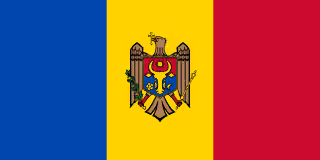
Can You Drink Tap Water in Moldova?
Tap water in Moldova is not safe to drink. Bottled or filtered water is essential for all visitors throughout the country.
Complete Drinking Water Safety Information for Moldova
Tap water in Moldova is not safe to drink and should be avoided throughout the country. Moldova has some of the most significant water infrastructure challenges in Europe — a legacy of Soviet-era underinvestment compounded by decades of economic difficulty following independence in 1991. Moldova is one of Europe's poorest countries and water and sanitation infrastructure has received limited sustained investment. Water quality is a serious public health concern throughout the country.
In Chișinău, the capital, tap water is treated at municipal facilities but the distribution network is aging and contamination through leaking pipes is documented. Water supply can be intermittent in parts of the city. Most Chișinău residents — including the growing expat community attracted by the city's affordability and wine tourism scene — use bottled water or large water dispensers for drinking. Hotels catering to international visitors provide bottled water as standard.
Outside Chișinău, water infrastructure deteriorates significantly. In rural Moldova — where a large proportion of the population still lives — many communities rely on wells of variable and often poor quality. Groundwater contamination from agricultural chemicals including nitrates is a documented and serious public health issue in rural Moldova, particularly affecting young children. In Transnistria, the breakaway territory on Moldova's eastern border, water infrastructure is similarly aged and bottled water is the only safe choice.
Moldova has been developing rapidly as a wine tourism destination — its wine cellars including Cricova and Milestii Mici are among the largest in the world — and visitor numbers have been growing. For all visitors, bottled water is essential throughout the country.
Bottled Water information in Moldova

Bottled water is available in Chișinău at supermarkets, shops, and hotels at affordable prices. Moldovan and Romanian brands are widely available. Outside Chișinău, bottled water availability is less consistent in smaller towns and rural areas — stock up before leaving the capital for rural destinations. In wine tourism areas including Cricova and Milestii Mici, tourist facilities provide bottled water.
Is ice safe in Moldova?
Ice should be avoided throughout Moldova unless confirmed to be made from purified or bottled water. In international hotels in Chișinău, ice is generally made from filtered water and is reasonably safe. In local restaurants and cafes, ice may be made from tap water and should be avoided. Request chilled bottled drinks at local establishments throughout the country.
Can you use a water filter in Moldova?
A multi-stage water filter including activated carbon is recommended for extended stays in Moldova. Standard hollow fibre filters remove bacteria and protozoa but not nitrates or agricultural chemical contaminants present in rural groundwater. For visitors in Chișinău, bottled water is the practical primary choice. For anyone spending time in rural Moldova, a comprehensive filter system or exclusive use of bottled water is essential.
Should you boil tap water in Moldova?
Yes, boiling is recommended if tap water is your only option. A rolling boil for one minute kills biological pathogens. In rural areas, boiling does not address nitrate or chemical contamination — bottled water is the only safe option in agricultural rural areas. Bottled water is the standard recommendation throughout Moldova for all visitors.
Popular destinations inMoldova
Questions!
Can you drink tap water in Chisinau?
No. Tap water in Chisinau is not safe to drink. The city has treated water but aging distribution pipes create contamination risks. Most residents and all visitors use bottled or filtered water. Hotels provide bottled water as standard.
Is Moldova safe for wine tourism?
Yes. Moldova is increasingly popular as a wine tourism destination with world-famous cellars including Cricova and Milestii Mici. Standard food and water hygiene precautions apply — use bottled water throughout your visit and do not drink from taps anywhere in the country.
What is the nitrate contamination problem in rural Moldova?
Agricultural chemical contamination, particularly nitrates from fertilisers, is a serious public health issue in rural Moldovan groundwater. Wells in agricultural areas frequently exceed safe nitrate limits. This is a particular risk for infants. Travelers in rural Moldova should use only sealed bottled water from commercial sources.
Is water safe in Transnistria?
Transnistria, Moldova's breakaway territory, has similarly aging water infrastructure to mainland Moldova. Bottled water is strongly recommended throughout Transnistria. Note that travel to Transnistria requires additional consideration of the political situation and entry requirements.
What bottled water brands are available in Moldova?
Moldovan and Romanian mineral water brands are available at affordable prices in Chișinău supermarkets. Stock up before heading to rural areas where availability is more limited.
We don't conduct independent water testing. We summarises and interpret publicly available official data. Conditions can change rapidly — always verify with local authorities before travelling.
Explore all popular destinations inMoldova
Explore more countries in Europe
Complete tap water safety guides for European countries, covering Western Europe, Eastern Europe, Southern Europe, and Northern Europe.





.svg)
