

Can You Drink Tap Water in Montenegro?
Tap water in Montenegro is treated in major cities and is generally considered safe in some areas, but bottled water is recommended for most visitors due to infrastructure variability.
Complete Drinking Water Safety Information for Montenegro
Tap water in Montenegro is a mixed picture — treated and considered safe by local authorities in several areas, but variable enough in quality and infrastructure reliability that most visitors choose bottled water as the safer default. Montenegro is not an EU member state, though it is an EU candidate country, and its water quality standards are in the process of being aligned with EU directives. Infrastructure quality varies considerably between the coast, the capital, and the mountainous interior.
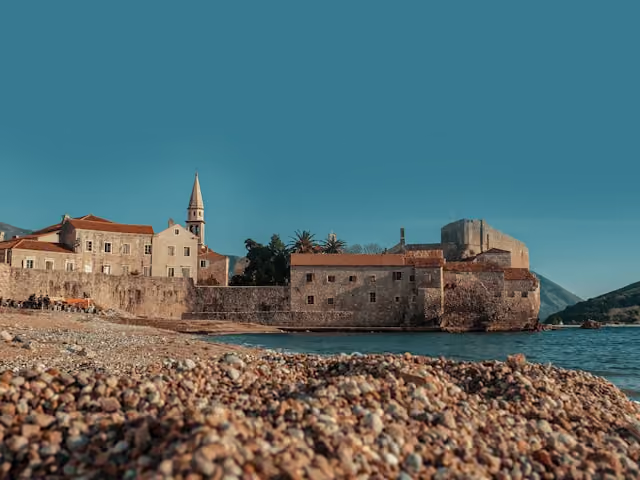
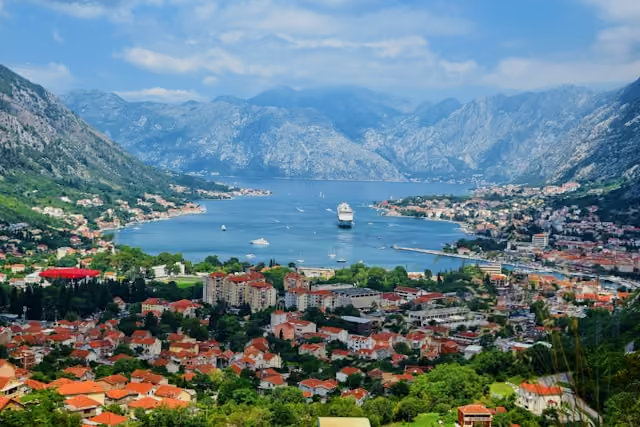
In Podgorica, the capital, tap water is treated and generally considered safe to drink by local standards. However, the distribution infrastructure is aging in parts of the city and water pressure can be inconsistent. Many residents use filters or bottled water as a precaution. In Budva — Montenegro's most popular Adriatic beach resort and the centre of its summer tourism — tap water is available and treated but most hotels and restaurants serve bottled water as standard to guests. The same applies in Kotor, whose stunning medieval Old Town and Bay of Kotor setting make it one of the Adriatic's most searched destinations.
In Herceg Novi, Tivat, Bar, and Ulcinj along the Adriatic coast, water infrastructure is similarly variable. The summer tourist season puts significant demand pressure on coastal water systems, which can affect quality and pressure. In the mountainous interior — including the Durmitor National Park area around Žabljak — water is often sourced from mountain springs and is generally of good quality, though treatment levels vary by location.
Montenegro's water sources are genuinely excellent — the country has abundant clean mountain springs and rivers — but the distribution and treatment infrastructure has not always kept pace with the quality of the natural resource.
Bottled Water information in Montenegro

Bottled water is widely available throughout Montenegro at supermarkets, shops, kiosks, and hotels. Prices are affordable at €0.50–1.20 per 1.5-litre bottle. Local Montenegrin mineral water brands are available alongside imported Slovenian and Serbian brands. Bottled water is the standard recommendation for visitors throughout the country, particularly in coastal resort areas during summer.
Is ice safe in Montenegro?
Ice in hotels and tourist-oriented restaurants in Budva, Kotor, and other coastal resorts is generally made from filtered or commercial water and is reasonably safe. In local konobas and smaller establishments, ice may be made from tap water. In popular tourist areas during summer, ice safety in commercial venues is generally not a major concern. Request chilled bottled drinks if uncertain about ice quality in any establishment.
Can you use a water filter in Montenegro?
A portable filter is a useful precaution for Montenegro, particularly for those trekking in Durmitor National Park or staying in remote mountain accommodation where the water source may be a spring or well. For visitors staying in coastal hotels and resorts, bottled water provided by the accommodation is the more practical option.
Should you boil tap water in Montenegro?
Boiling is recommended if tap water is your only option. A rolling boil for one minute is effective against biological pathogens. Bottled water is cheap and widely available throughout Montenegro making boiling rarely necessary for visitors. In remote mountain areas where spring water is the only source, boiling or filtering is advisable.
Popular destinations inMontenegro
Questions!
Can you drink tap water in Kotor?
Kotor's tap water is treated and considered safe by local standards, but most visitors and hotels use bottled water. Given the variability of infrastructure on the Montenegrin coast, bottled water is the recommended choice throughout your stay in Kotor and the Bay of Kotor area.
Is water safe in Budva beach resort?
Budva has treated tap water but most hotels serve bottled water as standard. During the busy summer season, water pressure and consistency can vary. Bottled water is widely available and inexpensive throughout the resort.
Can you drink mountain spring water in Durmitor National Park?
Montenegro's mountain springs are generally of high natural quality. Some springs are marked as drinking water sources by locals. However, for visitors, treating spring water with a filter or purification tablets is advisable as a precaution, particularly near areas with livestock activity.
Is tap water in Montenegro improving?
Yes. As an EU candidate country, Montenegro is aligning its water quality regulations with EU standards. Infrastructure investment is ongoing, particularly in tourist areas. Water quality has improved in recent years but full EU-level consistency has not yet been achieved.
Is water safe in Podgorica?
Podgorica's tap water is treated and considered safe by local standards. Many residents use filters or bottled water as a precaution. For visitors, using bottled water throughout your stay is the recommended approach.
We don't conduct independent water testing. We summarises and interpret publicly available official data. Conditions can change rapidly — always verify with local authorities before travelling.
Explore all popular destinations inMontenegro
Explore more countries in Europe
Complete tap water safety guides for European countries, covering Western Europe, Eastern Europe, Southern Europe, and Northern Europe.



📚 Official Resources & Further Reading

.svg)
