

Can You Drink Tap Water in France?
Tap water in France is safe to drink throughout the country and meets strict EU safety standards.
Complete Drinking Water Safety Information for France
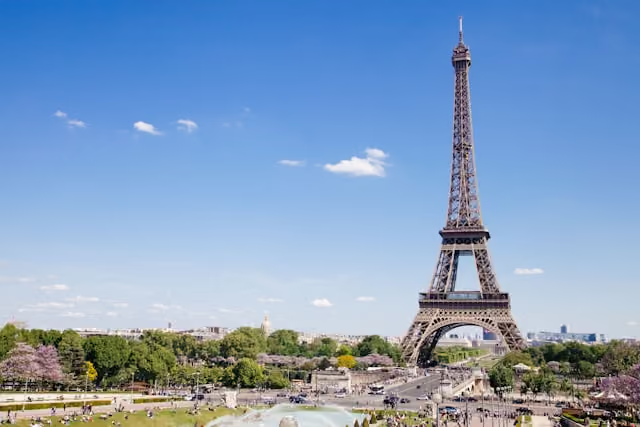
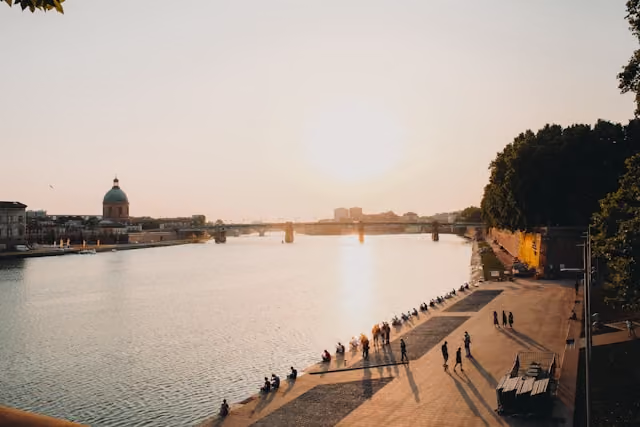
Tap water in France is completely safe to drink throughout the entire country and meets some of the strictest water quality standards in Europe. In Paris, Lyon, Marseille, Nice, Bordeaux, Toulouse, and all French cities, tap water is treated to excellent standards and safe for consumption. French tap water is heavily regulated and tested frequently to ensure safety. Parisians drink tap water daily and visitors should do the same confidently. Paris tap water comes from the Seine and Marne rivers, undergoes advanced treatment, and is of excellent quality.
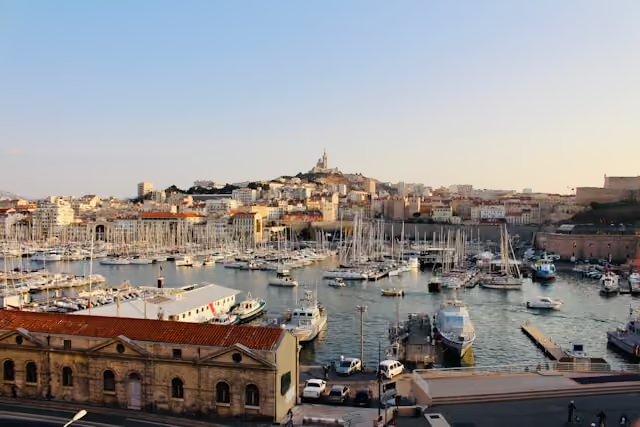
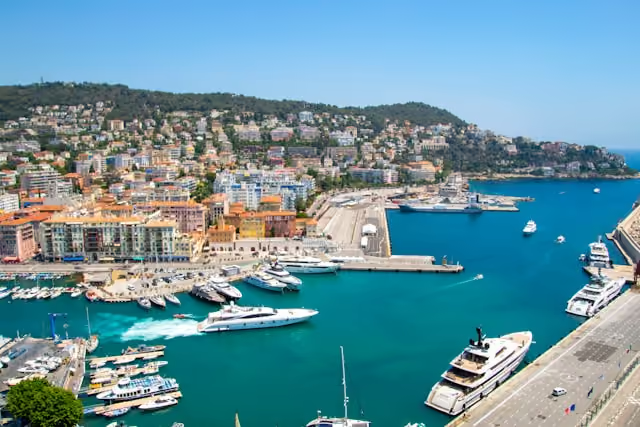
Public drinking fountains throughout Paris provide free safe water. Lyon, France's second city, has excellent tap water from Rhône River sources. Marseille and Provence have safe tap water meeting all EU standards. The French Riviera including Nice, Cannes, and Monaco has safe tap water throughout.
In rural France, Brittany, Normandy, the Loire Valley, and Burgundy, tap water quality remains excellent often sourced from protected groundwater. The French Alps and Pyrenees have pristine tap water from mountain sources. Throughout France, tap water can be used for drinking, brushing teeth, making ice, and cooking without any concerns. French restaurants serve tap water (carafe d'eau) free upon request and this is completely safe. France's water infrastructure is modern, comprehensive, and extremely reliable.
Despite perfectly safe tap water, many French people prefer bottled water for taste preferences and the cultural tradition of mineral water. Tourists can save money and reduce waste by drinking tap water, though bottled water is universally available.
Bottled Water information in France

Bottled water is available everywhere including Carrefour, Monoprix, Franprix, tabacs, and convenience stores. Prices range from €0.40-€1.50 per liter. Popular brands include Evian, Vittel, Volvic, and Perrier. However, tap water is safe, free, and excellent quality throughout France.
Is ice safe in France?
Ice is completely safe throughout France. All ice in restaurants, cafés, bars, and hotels is made from treated municipal water that meets strict EU safety standards. There are absolutely no concerns about ice consumption anywhere in France.
Can you use a water filter in France?
Water filters are not necessary for safety in France as tap water already meets excellent standards. Some people use filters for personal taste preferences, but filtration is purely optional and not required.
Should you boil tap water in France?
Boiling is completely unnecessary in France. Tap water meets exceptional safety standards and is safe to drink directly from any tap. Boiling is not practiced by residents and is absolutely not needed by visitors.
Questions!
Can you drink tap water in Paris?
Yes. Paris tap water is safe to drink and meets strict EU standards. The city even provides free public drinking fountains (fontaines Wallace) throughout the city. Some visitors notice a slight mineral taste, which is normal.
Is tap water safe across France?
Yes. Tap water is safe throughout France including Lyon, Marseille, Bordeaux, and rural regions. Standards are uniform and tightly regulated across the country.
Can you drink tap water in French overseas territories like Martinique?
Water safety varies in French overseas territories. In Martinique and Guadeloupe, tap water is generally treated but quality can be less consistent than mainland France. Check locally when visiting.
We don't conduct independent water testing. We summarises and interpret publicly available official data. Conditions can change rapidly — always verify with local authorities before travelling.
Explore more countries in Europe
Complete tap water safety guides for European countries, covering Western Europe, Eastern Europe, Southern Europe, and Northern Europe.


📚 Official Resources & Further Reading
World Health Organization – France Water Standards
European Environment Agency – Water Quality
France Ministry of Health
CDC – France Travel Information
French Water Authority

.svg)
